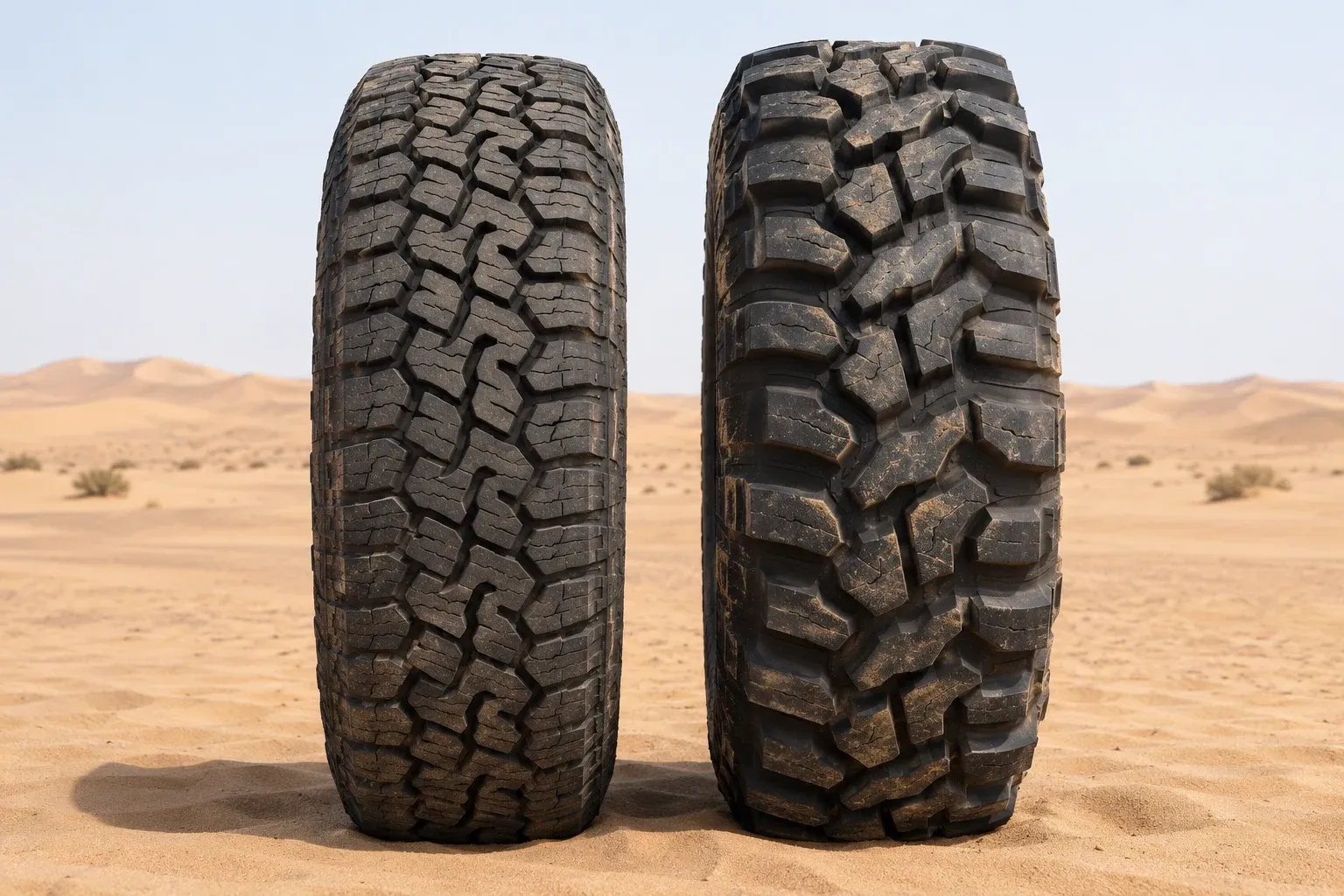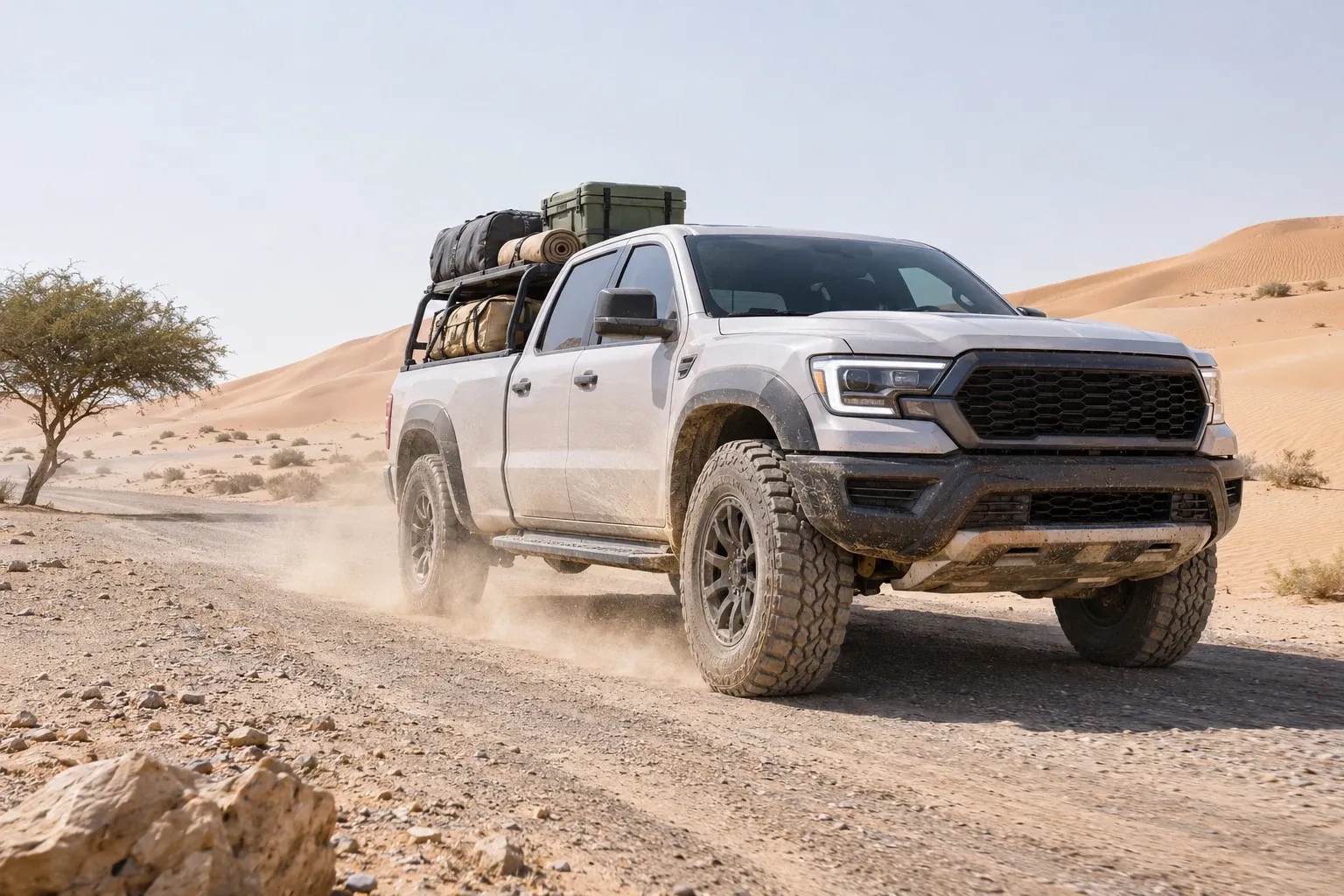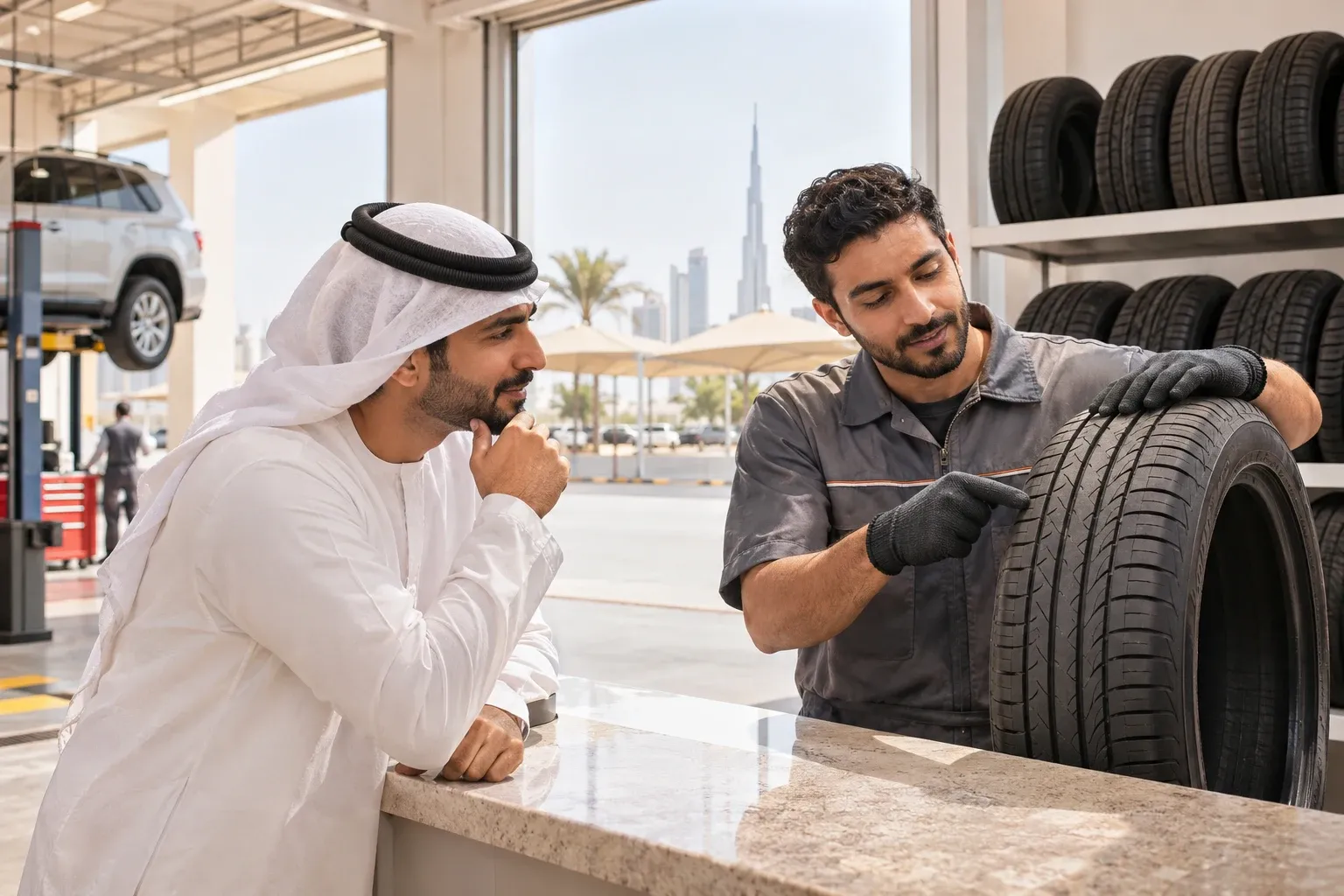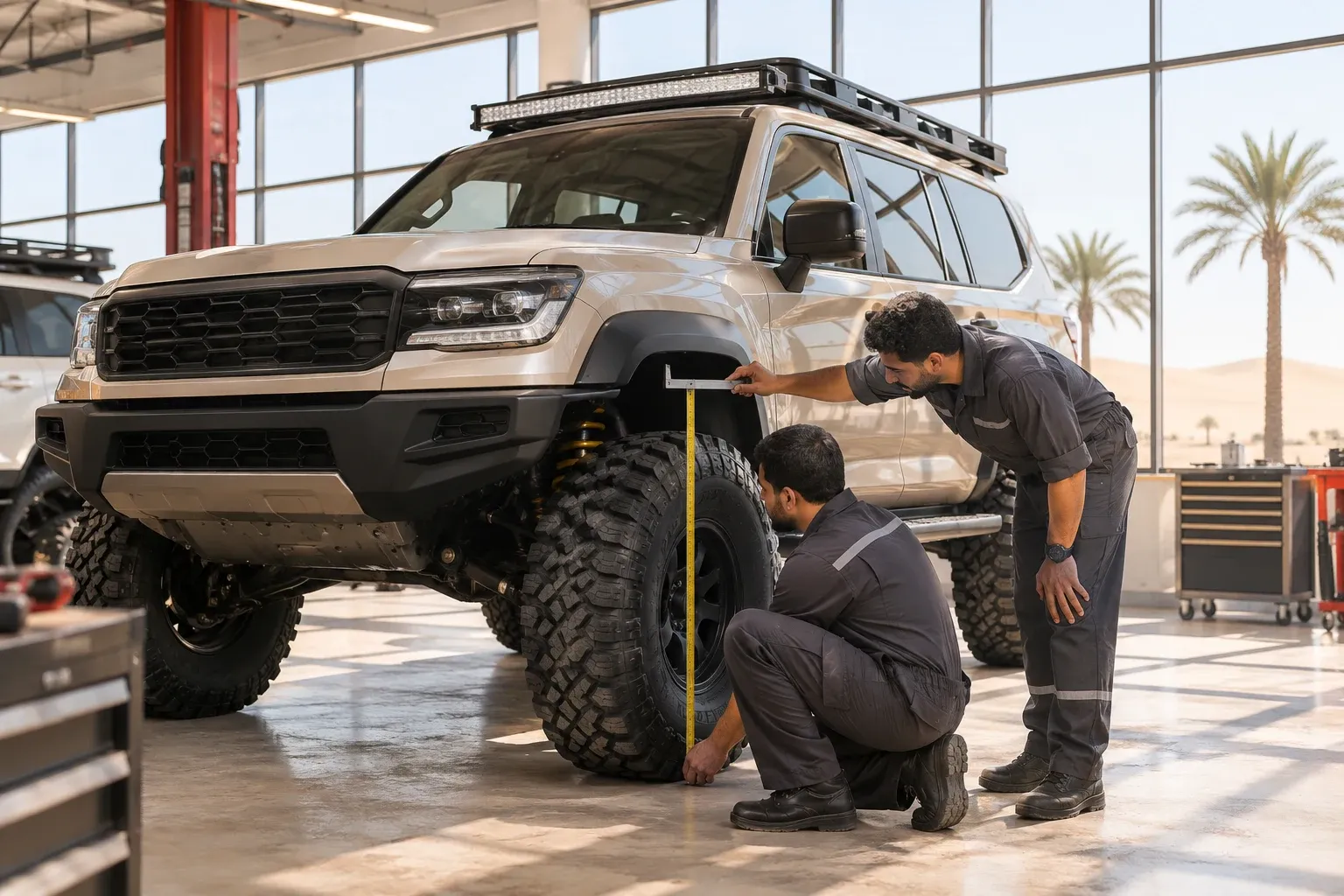
Many 4x4s take a slightly bigger tyre without any modification, but there is a limit set by arch clearance, steering lock, gearing and load rating. Go too far and tyres rub, the speedometer reads wrong and handling suffers. Check the door placard size first, then change in small steps.
I get this question from Patrol, Land Cruiser and Hilux owners nearly every week. The honest answer is that it depends, and the details matter more than the headline size.
What “bigger” actually means
People say bigger when they mean one of three things.
- Taller overall diameter. The tyre is higher, which raises the vehicle slightly and changes gearing.
- Wider tread. The tyre is broader, giving more contact but more chance of rubbing.
- Larger rim. A bigger wheel with a lower sidewall, which can keep the overall diameter the same.
A tyre size such as 265/65 R17 tells you the width in millimetres, the sidewall as a percentage of width, and the rim diameter in inches. If you want to read it properly, our tyre size guide explains each part.
Start with the factory size
OE sizes vary by trim and year. Your door placard shows what the vehicle was built with, and it is the baseline for any change. Do not rely on what a friend runs on a similar model. A Prado with one rim and a Prado with another may have different options.
Commonly seen sizes include 265/65 R17, 285/60 R18 and 275/70 R18, but yours may differ.
Comparing sizes
A quick calculation tells you how far a new size moves from the original. Work out each tyre’s overall diameter. Here is an illustration.
| Size | Approx. overall diameter | Change from 265/65 R17 |
|---|---|---|
| 265/65 R17 | about 31.6 in | baseline |
| 265/70 R17 | about 32.7 in | about 3.5% taller |
| 285/65 R17 | about 32.7 in | about 3.5% taller |
| 285/70 R17 | about 33.8 in | about 7% taller |
These are approximate. Always confirm with the tyre maker’s published figures, since models differ. A rough rule I use is to stay within a few percent of stock unless the vehicle is being modified properly.
What changes when you go bigger
Clearance and rubbing
Check three positions: full steering lock, full suspension compression and full articulation. A tyre that clears on a straight road can catch the arch liner on a dune ramp. The inside edge can also rub on suspension arms or the chassis. I look at all of these before we fit anything unusual.
Speedometer and odometer
A taller tyre covers more ground per turn, so the speedometer under-reads. At an indicated 100 km/h you may be going faster. This matters for fines and for distance readings. Many vehicles can be recalibrated.
Gearing and performance
Taller tyres act like a taller final gear. Acceleration feels softer, and an automatic hunts more on hills. A diesel Hilux with a big tyre and a tow load can feel sluggish. Some owners compensate with a gearing change, but that is a bigger job.
Load rating
Never trade load rating for looks. A bigger tyre with a lower load index than standard is unsafe on a loaded pickup or a heavy SUV. Check the number on the sidewall. A bigger, heavier-duty tyre with an XL or LT rating can be a good choice for towing and loaded trips, as discussed in our post on tyres for towing and camping.
Stability and braking
Heavier wheels add unsprung weight. Brakes work harder, and the steering may feel heavier. A taller tyre also raises the centre of gravity slightly. None of this is dramatic with a modest change, but it adds up with a big one.
Rim width matters
Each tyre has an approved range of rim widths. Fitting a wide tyre on a narrow rim pinches the tyre and changes the profile, and the reverse stretches the bead. Check the maker’s range for any new size. A mismatch causes poor wear and vague steering, and in the worst case a bead that unseats off-road.
When you need more than tyres
If you want a considerably bigger size, expect to deal with more than the tyre.
- Suspension lift to create space in the arch.
- Trimmed arches or liners to stop rubbing.
- Wheel offset changes to keep the tyre away from the chassis.
- Speedometer recalibration to correct readings.
- Wheel alignment after any change. Our wheel alignment starts from AED 180 per vehicle.
- Balancing for heavier wheels. See our wheel balancing service.
Each item adds cost, so budget for the whole job, not just the tyres. Our off-road tyre upgrade starts from AED 1,800 for a set of 4, and that price moves with size, brand and load rating.
Is it worth it?
Bigger tyres can help in sand, because a larger footprint floats better, and they add ground clearance. They also look good. But I have seen a lot of owners change size for appearance, then regret the noise, the fuel use and the sluggish feel. If your driving is mostly city and highway, a modest step is plenty.
If you drive in soft sand, the benefit often comes from pressure, not size. Read our post on tyre pressure for dune bashing before you spend on a bigger set.
A checklist before you order
- Note the factory size from the door placard.
- Decide the new size and calculate overall diameter.
- Check the rim width range for the tyre.
- Check the load index is equal or higher.
- Ask whether clearance has been tested on your model.
- Plan for alignment and balancing.
- Plan for speedometer correction if the change is more than a few percent.
Insurance and legal side
Check with your insurer before changing tyre size, since modifications may need to be declared. I will not state legal rules I am unsure of, so ask your insurer or the relevant authority for the current position. Keep the receipt and size record in the vehicle.
Examples of sensible and silly changes
A sensible change is a driver whose Land Cruiser runs a stock size and who wants a slightly taller all-terrain for a bit more clearance on soft tracks. We confirm clearance at full lock, check the load index, balance the wheels and align the vehicle. It works, and the driver notices a small improvement without a large penalty.
A less sensible change is the owner of a mid-size SUV who wants a tyre far larger than the manufacturer allows, on the stock suspension, because it looks good in a photo. The tyre rubs on the arch liner at full lock, the speedometer reads well off, the automatic gearbox hunts, and braking distances grow. After a few weeks the owner comes back to go smaller.
The lesson is to work from need. If you want better sand performance, tyre pressure and a good all-terrain may do more than extra size. If you want more clearance for rocks, a modest increase with a proper lift works better than a huge tyre on a standard setup. Decide what you want the change to do, then choose the smallest change that does it. That keeps costs down and the vehicle pleasant to drive.
My advice
Go up one step at a time and test it. If the vehicle rubs, you will know early. If it feels worse, you can go back. A shop that fits a huge size without checking clearance is not looking after you. Bring the vehicle in, let us measure, and we will tell you what fits and what does not, even if the answer is to stay with stock.