For towing and camping, pick tyres by load rating first, then by tread. A light-truck or heavy-duty all-terrain with a load index above your real weight handles heat and flex better than a standard passenger tyre. Set pressure for the loaded vehicle and check it before each trip.
Weekend camping in the UAE has grown, and so has the weight people put on their vehicles. Roof tents, fridges, water, drawers and trailers add up. I see tyres that were fine for a family commute fail within a season of heavy use.
Why load rating matters most
Every tyre has a load index, a number on the sidewall that maps to the maximum weight it can carry at its rated pressure. When you add a roof tent and a fridge, you raise the weight on each tyre. When you tow, you add extra downward force on the rear and extra heat from flexing.
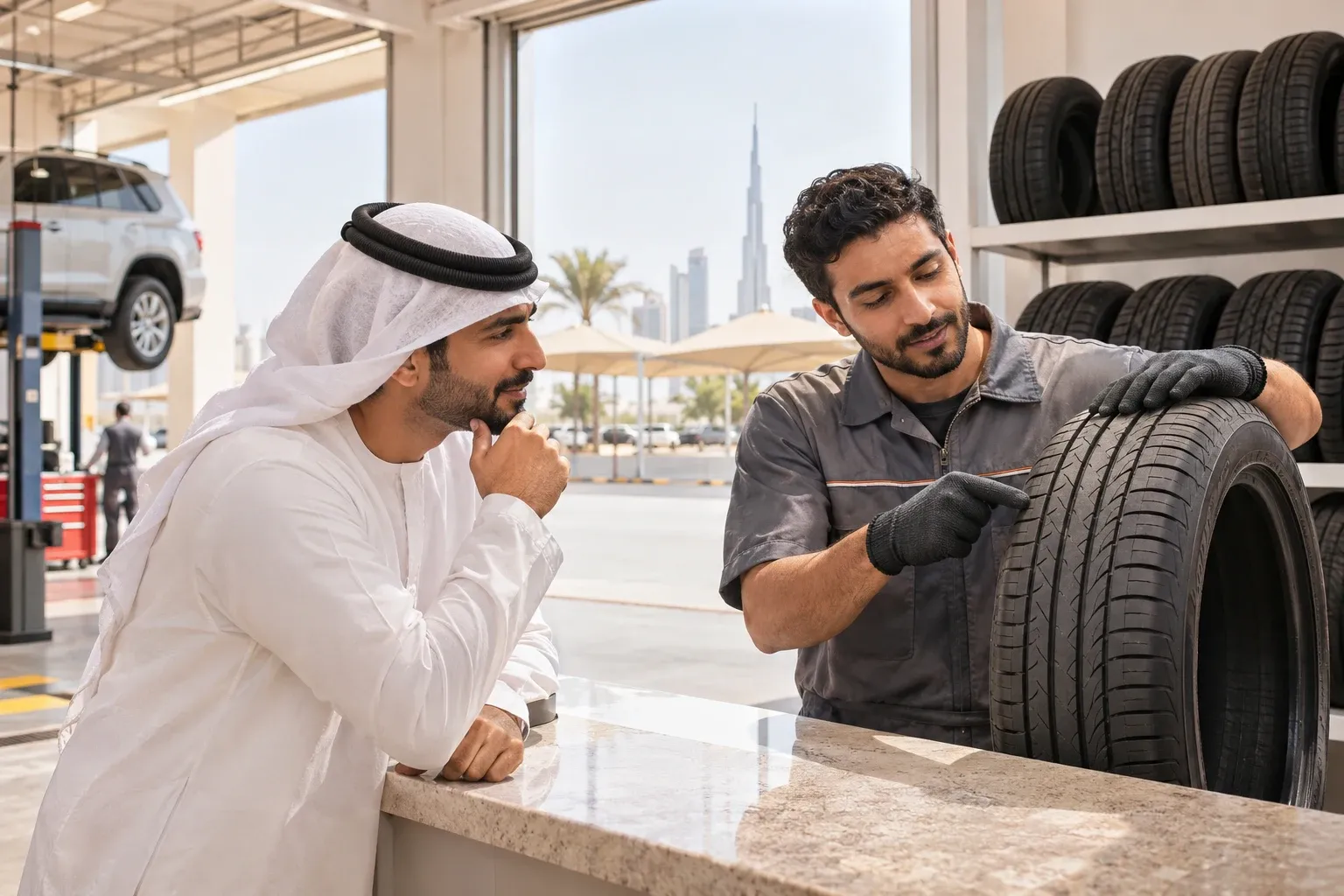
A tyre that is too light for the job flexes more, runs hotter and wears faster. In UAE summer, that combination is a common path to failure. Check the load index and compare it with your vehicle’s maximum axle weights in the handbook. If you are unsure, bring the vehicle in and we will read the figures with you.
Tyre types for loaded use
| Type | Strength | Trade-off |
|---|---|---|
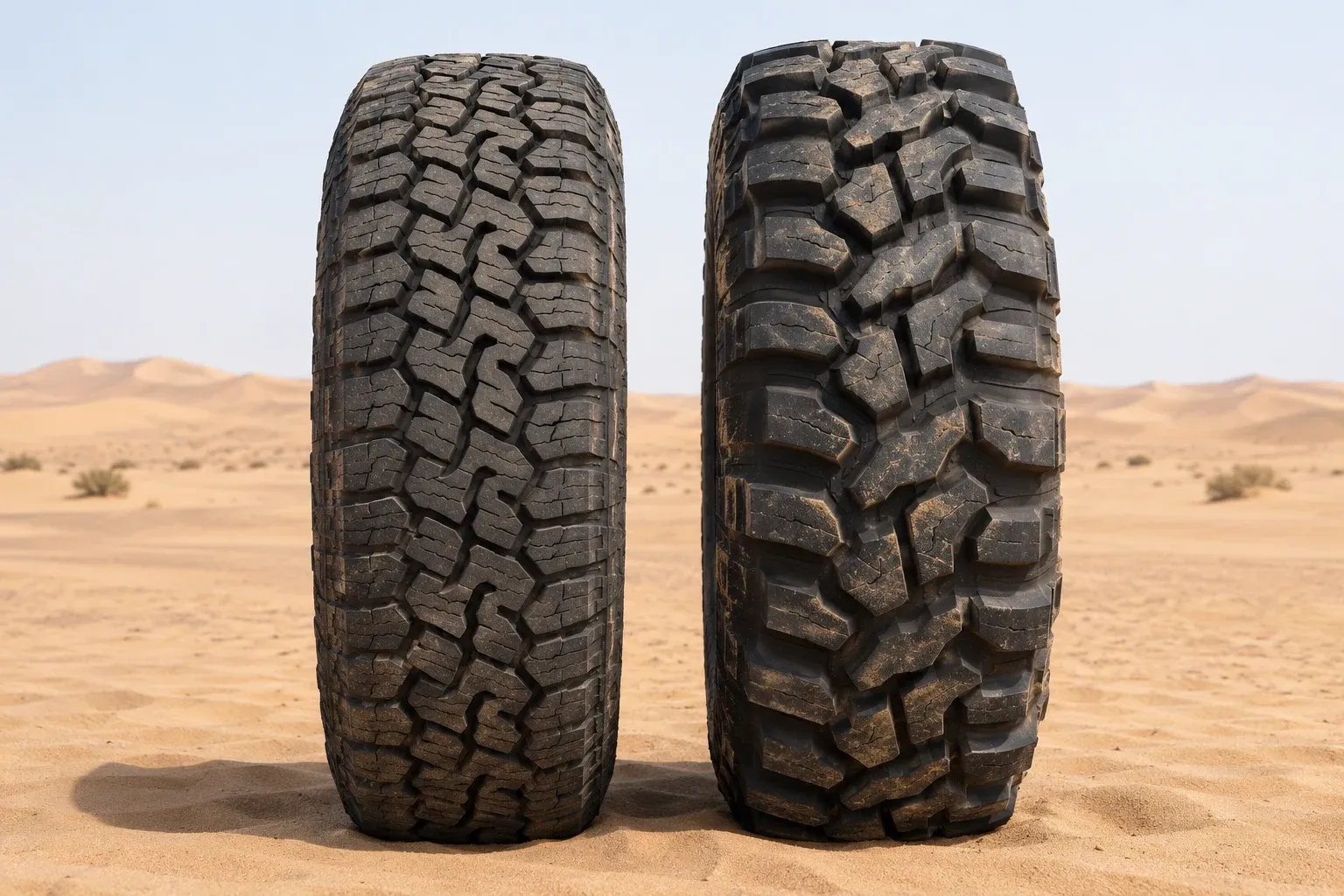
| Light-truck | Strong carcass, high load rating | Firmer ride, often heavier |
| All-terrain with strong rating | Good balance of road and desert | Check the load index carefully |
| Highway-terrain | Quiet, long wear on tarmac | Less suited to sand and rough tracks |
| Mud-terrain | Tough sidewalls | Noisy and heavier wear on hot road |
For most people towing a trailer or carrying camp gear, a good all-terrain or a light-truck tyre is the sensible pick. A highway-terrain makes sense if you tow only on tarmac, for instance to a campsite near the coast.
Reading the markings
On the sidewall you will find the size, load index and speed rating, for example 265/70 R17 with 115T. The 115 is the load index and the T is the speed rating. Some tyres carry an extra-load marking or a ply rating that shows a heavier build. Our tyre size guide explains the parts.
Never fit a tyre with a lower load index than your vehicle’s original specification. The door placard shows factory size and pressure, and gives you the baseline for upgrades.
Pressure for towing and camping
Why it changes
A loaded vehicle needs more support from the tyre. Too little pressure means excess flex and heat. Too much means a hard ride and uneven wear. The vehicle handbook or placard often gives a separate pressure for heavy load. Follow it where it exists.
How to set it
- Check cold, before the journey.
- Use the loaded figure for the rear if the handbook lists one.
- Check the trailer tyres to the trailer’s own placard.
- Recheck on a long trip when you stop, but do not let air out of hot tyres.
A tyre set correctly is the cheapest upgrade you can make. See our tyre pressure guide for the basics, and book a tyre pressure check from AED 30 per vehicle if you want help.
Camping on sand with a heavy vehicle
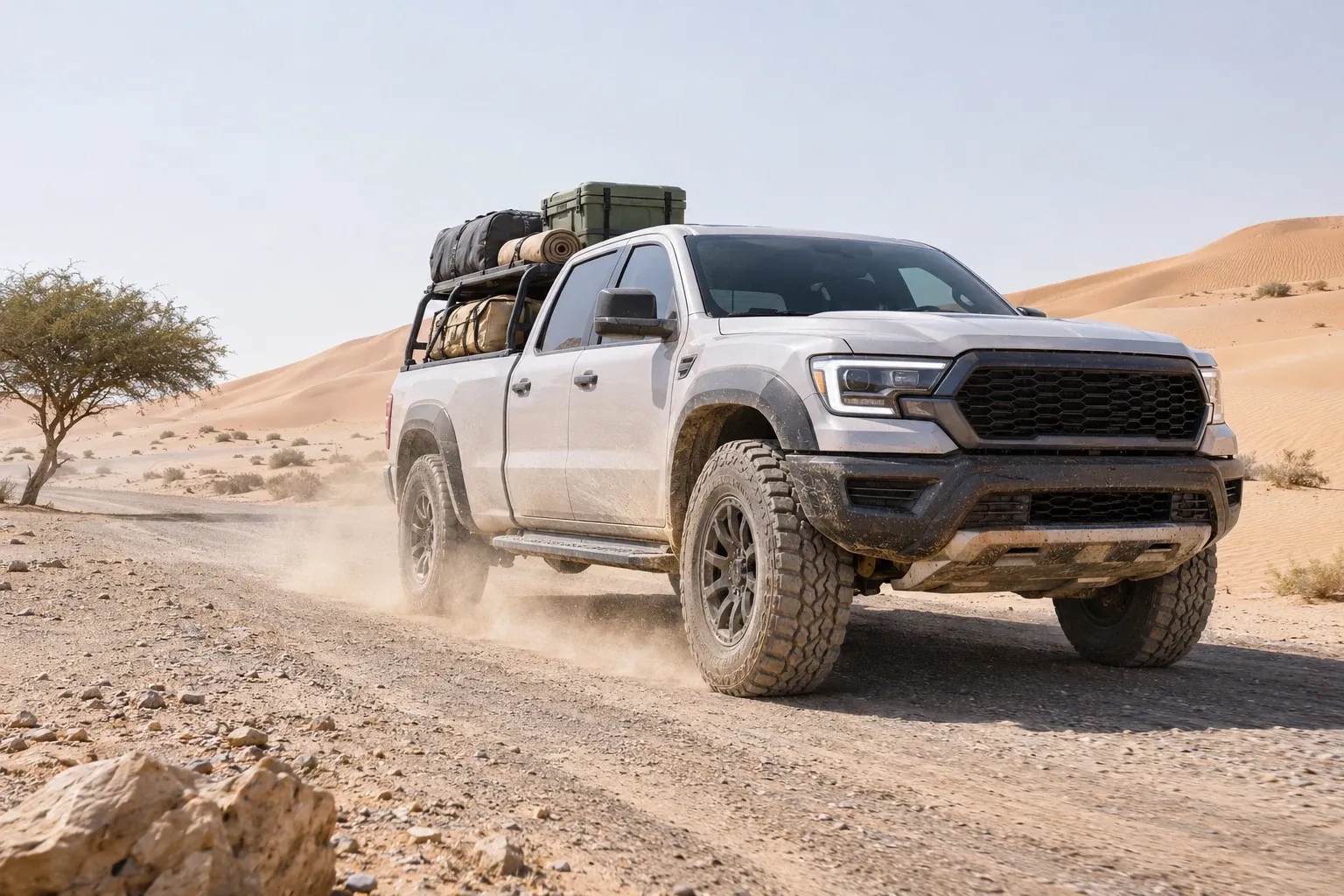
A heavy vehicle sinks further, so desert camps at places like Al Badayer or Liwa need more care. You want to lower pressure for flotation, but a loaded tyre at low pressure risks overheating and bead trouble. Keep speed down, drop pressure in modest steps and reinflate before the road. Our guide on tyre pressure for dune bashing gives starting points, and a loaded vehicle should stay toward the higher end of each range.
Trailers and caravans
Trailer tyres are often forgotten. They sit for months, bake in the sun and then are asked to carry a lot at highway speed. Common problems I see:
- Date codes that are well beyond five years.
- Cracked sidewalls from sun exposure.
- Flat spots from standing in one place.
- Low pressure, since nobody checks them.
- A spare that is missing or perished.
Treat trailer tyres as seriously as the car’s. Replace them by age, not tread. Our post on reading the tyre date code works for trailer tyres too.
Heat and distance
Towing in summer on the E11 or E611 pushes tyre temperature up. A few habits help.
- Start with pressure set cold.
- Stop for a short break on long runs, and feel the tyres, hot is normal, too hot to keep a hand on is a warning.
- Keep to a steady, moderate speed.
- Spread the load. Heavy items low and near the axle.
- Check wheel nuts after the first stretch.
Choosing by vehicle
Pickup owners with a canopy often need a tyre with a higher load rating than stock. Land Cruiser and Patrol drivers who carry roof tents should check both weight and the roof’s rating. Smaller SUVs towing a light trailer should check the vehicle’s tow limit as well as the tyres. Our tyres by vehicle pages cover common sizes, and the full-size pickup page is a good place to start if you drive a Hilux, F-150 or similar.
Cost
New off-road tyres start from AED 390 per tyre. Heavier load ratings and larger sizes cost more, as do premium brands. Price moves with size, brand, load rating, rim diameter and location. A higher load rating is often worth paying for if you carry weight regularly, but a cheaper tyre is fine if you only tow occasionally and stay within limits.
Checking your real weights
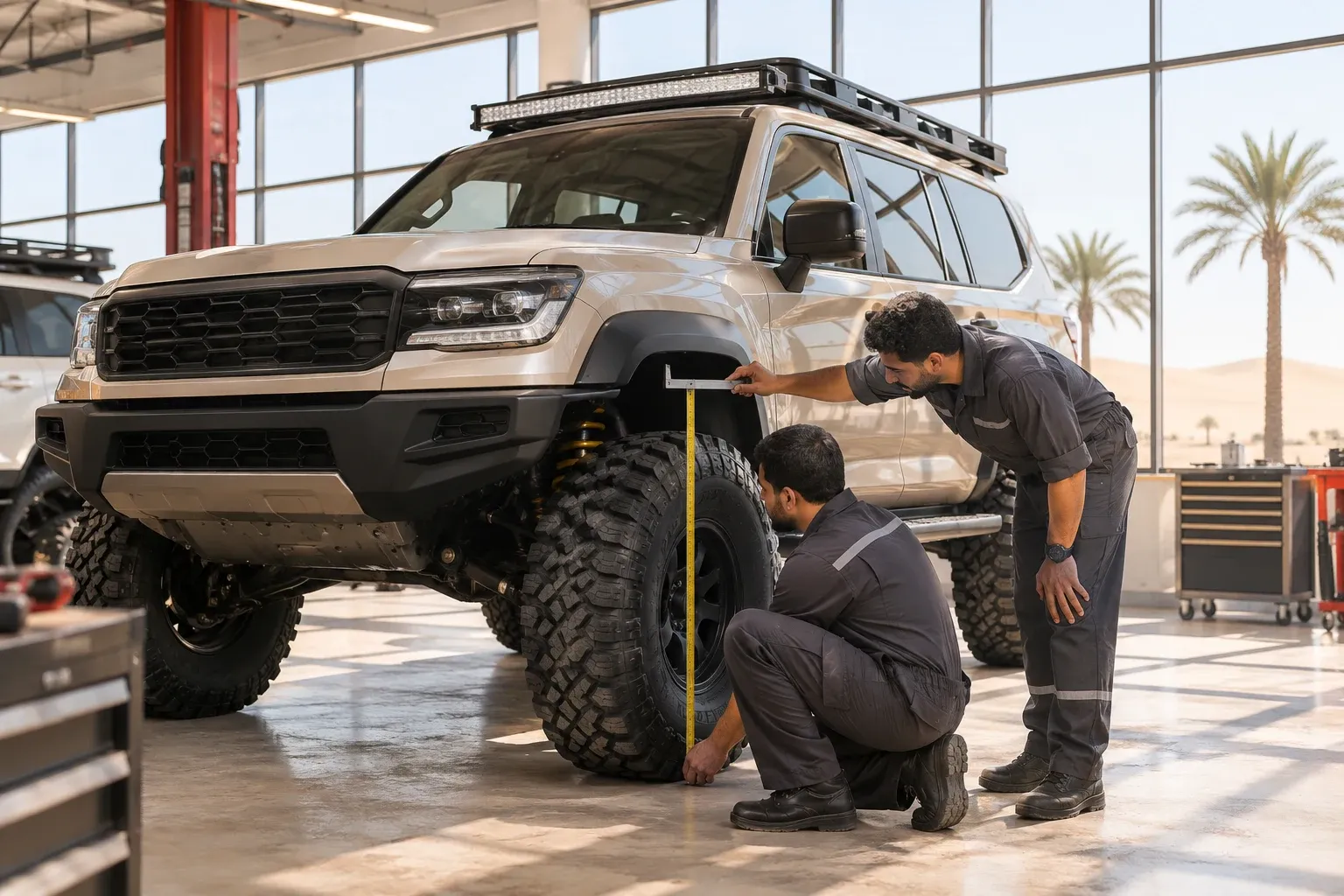
Most owners underestimate how much they carry. Add up the pieces. A roof tent, a ladder and a rack can be heavy. Water is heavy. A fridge with food is heavy. Four people and their bags add up quickly. In a pickup, a canopy and a drawer system might weigh as much as another passenger or two.
Start with the vehicle’s maximum permitted weight, which your handbook or compliance plate gives. Compare it with what you actually load. If you are close to the limit, the tyres are working near their own limit too. If you are over, you have a problem that tyres alone cannot solve.
A public weighbridge can tell you what the vehicle weighs when loaded for a trip. It is a small effort that gives a real answer. Then compare the weight per axle with the tyre ratings. If the numbers are tight, choose a tyre with a higher load index and run correct pressure.
This approach beats guessing, and it protects both the tyres and the vehicle’s brakes, springs and chassis. It also keeps you on the right side of any rules on vehicle weights.
A quick pre-departure routine
On the morning of a trip, walk around the vehicle and trailer with a gauge and a torch. Check pressure cold on every tyre, the spare included. Look at each sidewall for cuts and bulges, and make sure every wheel nut is tight. Check the trailer’s lights and coupling too, because a tyre problem on a trailer often shows up first as a pull or a shake. It takes ten minutes and it removes most of the avoidable problems I see on camping weekends.
What I tell drivers
Look at your real weight, not the brochure weight. Weigh the vehicle fully loaded at a public weighbridge if you can. Choose the tyre for the heaviest trip you make, not the average one. And never overload to save a trip, since the tyre has no way of complaining until it fails.