Tyres rarely burst from heat alone. In UAE summer the usual cause is a tyre that was already weakened by low pressure, age, overload or hidden impact damage, then pushed past its limit by hot tarmac. Fix those four things and the risk falls sharply.
I attend more call-outs in July and August than any other time, and the story behind them repeats. Here is what is actually happening inside the tyre and what you can do about it.
What happens inside a hot tyre
A tyre flexes every time it rolls. That flexing creates heat inside the rubber and the cords. On a normal day this heat escapes. On a UAE summer road, with tarmac surface temperatures far above the air temperature, the heat has nowhere to go.
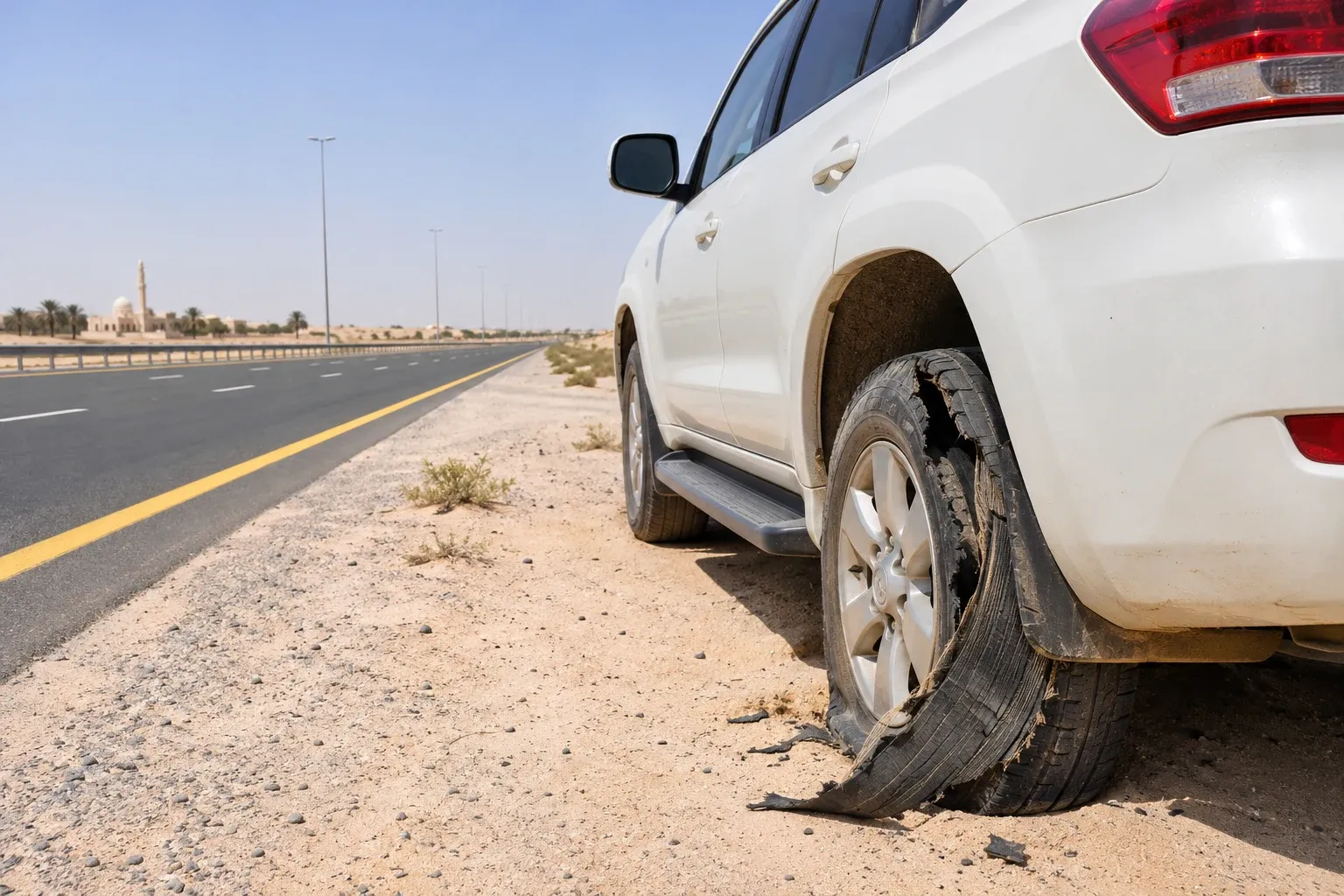
If the tyre is under-inflated, it flexes more, so it builds more heat, so the rubber and the bond between the layers weaken. Eventually a layer separates, and the tyre loses its structure at speed. That is the burst.
The four common causes
1. Low pressure
This is the biggest one. A tyre a few psi low looks fine from outside. It runs hotter, wears at the shoulders and has less margin. Pressure also drops slowly over weeks, so many drivers have no idea. Check cold, monthly, against the door placard. A quick tyre pressure check starts from AED 30 per vehicle.
2. Old rubber
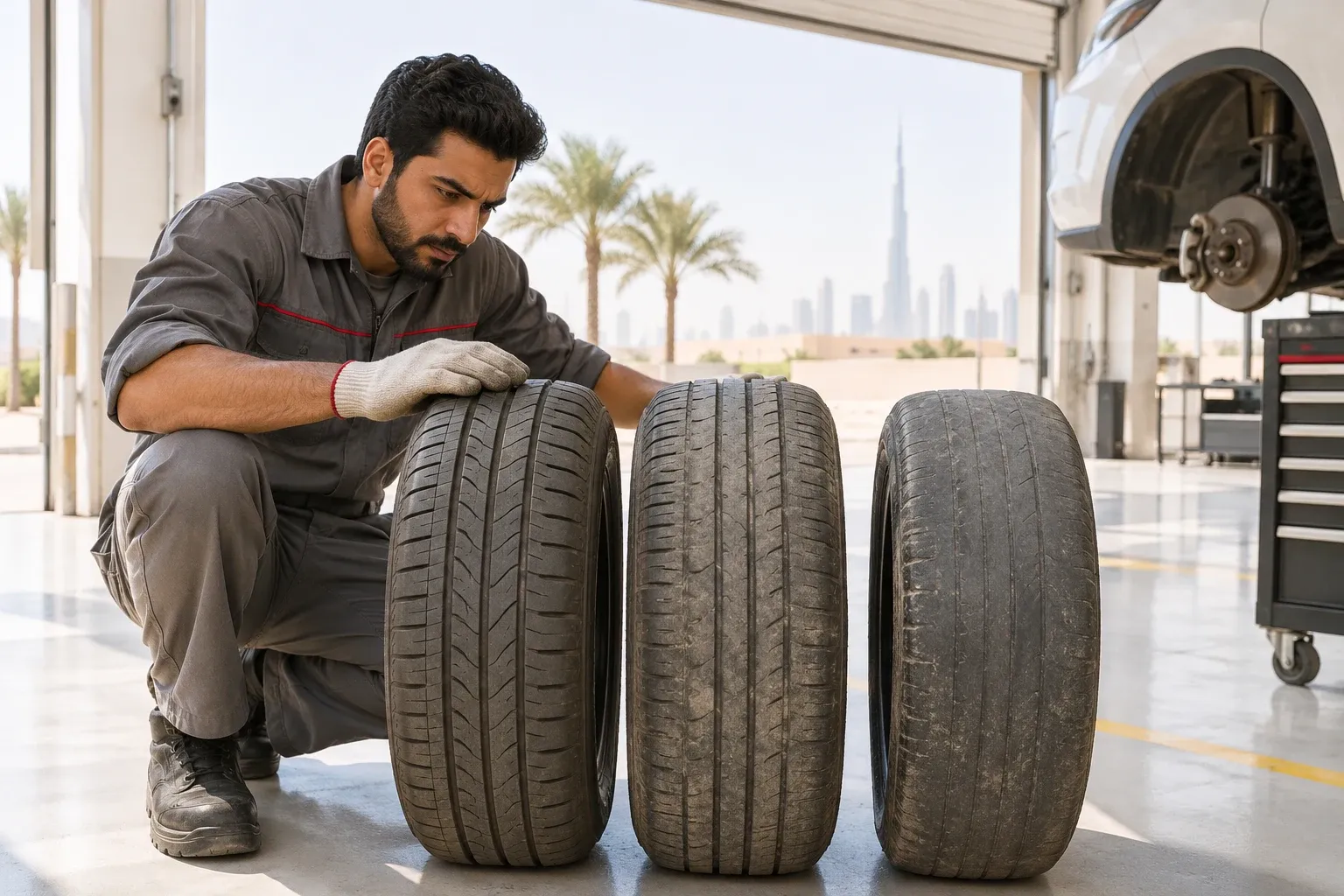
Rubber ages and hardens with heat. A tyre that looks fine can have internal cracking. Most makers advise inspection from 5 years and replacement by 10, and UAE heat often shortens this. The date code tells you the age, as covered in our guide to reading the tyre date code.
3. Overload
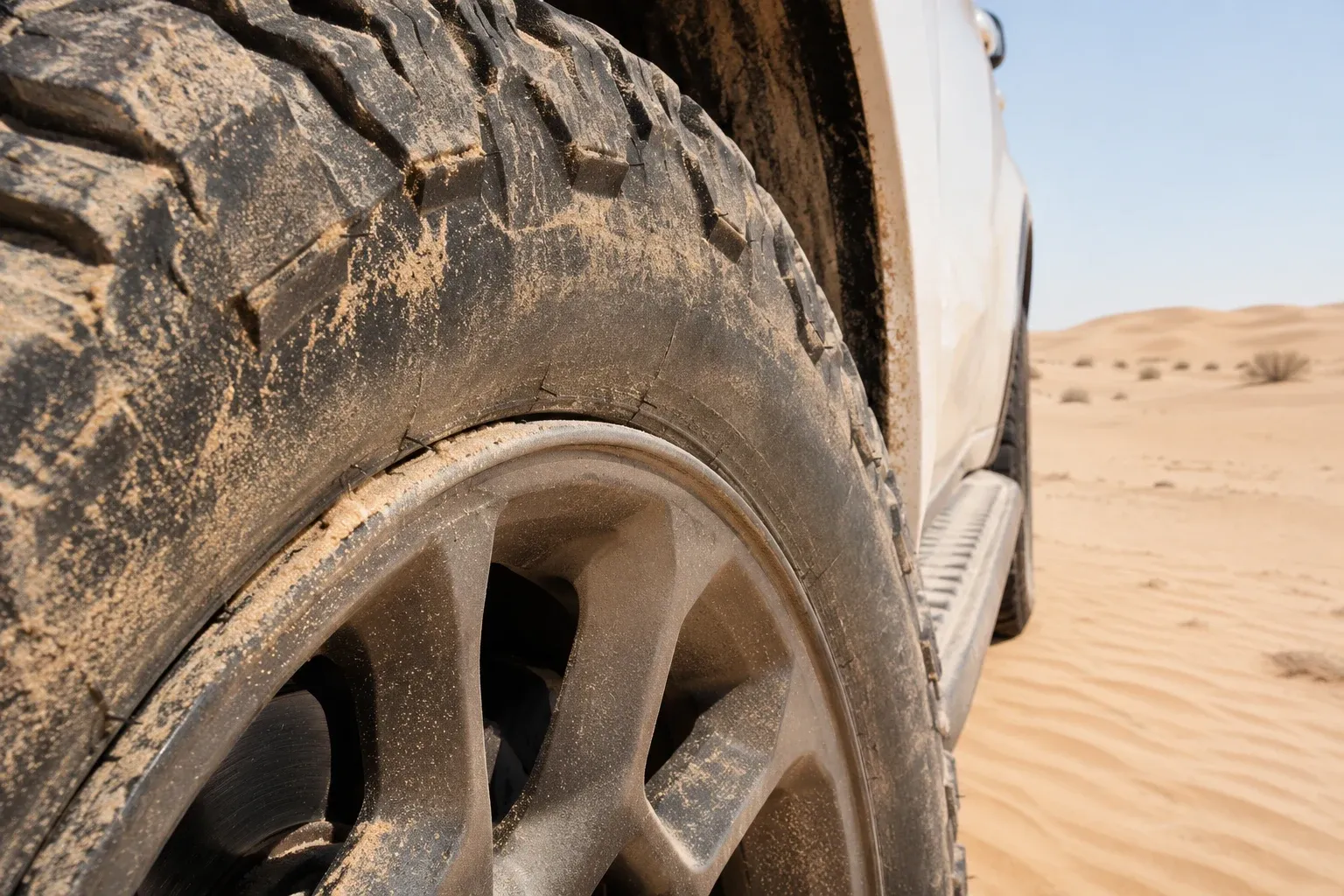
Carrying more than the tyre load index allows, whether people, camping gear or a tow, adds flex and heat. This catches pickup and Land Cruiser owners who add a roof rack, a drawer system and a fridge, then forget the tyres were rated for the standard load.
4. Hidden damage
A kerb strike, a pothole on Sheikh Zayed Road or a sharp rock can damage the inside of the tyre without leaving a mark outside. Weeks later, heat finds the weak spot. If you have had a hard impact, have the tyre inspected inside and out.
Warning signs before a failure
Most tyres give some notice. Learn these.
- A steering wheel vibration that arrives at speed and was not there before.
- A bulge or blister on the sidewall.
- Cracks in the rubber, especially between tread blocks.
- Pressure that keeps dropping, which may mean a slow puncture or a leaking valve.
- A burning rubber smell after a long drive.
- Uneven wear across the tread.
If you see any of these, do not wait for a cooler month. A tyre inspection starts from AED 50 per vehicle, which is cheap compared with a blowout at 120 km/h.
Summer habits that help
Set pressure cold
Check before you leave in the morning or after the car has stood in shade. Hot tyres read higher, so a reading at midday is misleading. Pressure rises about 1 psi for every 5 to 6 degrees Celsius.
Do not bleed a hot tyre
If a hot tyre reads above the placard figure, leave it. Taking air out means it will be low once it cools, and a low tyre is the dangerous one.
Carry a working spare
Check the spare too. It ages as well, and a flat spare helps nobody. Our spare tyre service starts from AED 90 per visit.
Reduce speed on long hot runs
Sustained high speed on the E11 or E311 at midday builds more heat than a short trip. Taking a break on long journeys lets tyres cool.
What to do in a blowout
Panic causes more damage than the blowout itself. If a tyre fails at speed:
- Hold the steering wheel firmly with both hands.
- Ease off the accelerator. Do not stamp on the brake.
- Keep the vehicle straight as it slows.
- Signal and move to the hard shoulder only when speed is low.
- Switch on hazards and stand well clear of traffic.
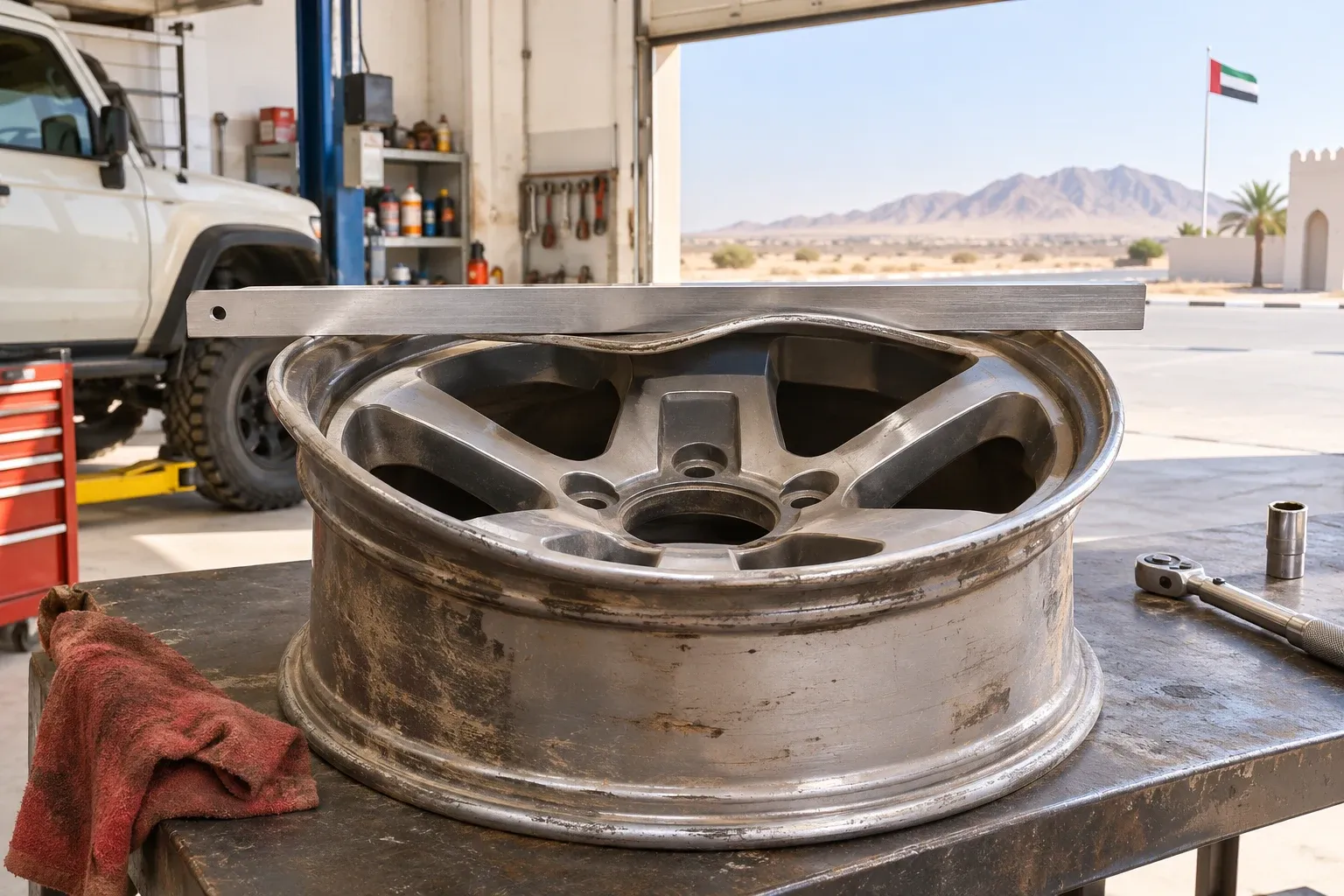
Do not drive on a failed tyre to find a better spot. The rim will be destroyed in a short distance, and then you are looking at a rim repair bill as well.
Is the repair possible?
A tyre that has burst is finished. A tyre that has only a nail puncture in the tread may be repairable, but a sidewall or shoulder puncture never is. I also will not repair a tyre that has been run flat for any distance without opening it up for an internal inspection. Many drivers ask me to patch a tyre they drove on after a flat, and the answer is often no. That is a safety call, not a sales call.
What a summer tyre check looks like
When a driver books a check before summer, I do the following:
- Measure and set pressure cold on all five tyres.
- Read the date codes.
- Check the tread depth and look for uneven wear.
- Inspect sidewalls for cracks and bulges.
- Look inside the tread for embedded stones or nails.
- Check valve stems and caps.
It takes a short visit and often finds the one tyre that was going to fail. For more on keeping tyres healthy through the hot months, read our summer tyre care guide.
What the technician sees afterwards
When a failed tyre reaches my workshop, I can usually read the story in it. A tyre that ran low for a long time shows a ring of damage on the inner sidewall, where the rubber has been crushed and overheated. A tyre that was overloaded shows breakdown across the shoulder. A tyre with old age shows fine cracks and a dry, dull surface even where it looks clean.
The tyre rarely tells me heat alone did it. There is nearly always a reason underneath, and the reason is almost always something the driver could have caught. That is the useful part. If you can spot the early version of each fault, you can fix it before it becomes a roadside event.
I also see the knock-on cost. A driver who keeps rolling after a blowout can ruin the rim, the wheel arch and sometimes brake lines or a sensor. A short stop and a call usually costs less than the extra damage. If the tyre is gone at speed, take care, stop safely, and then call a mobile service rather than limp on.
Prevention is cheaper every time. A gauge, a torch and a few minutes each fortnight beat a call-out in August.
Pressure drift you cannot see
A tyre can lose a pound or two a month through the rubber and the valve with no puncture at all. Over a cool season that goes unnoticed, and when the hot months arrive the tyre is already low. That is why I advise a pressure check at the start of summer, not only when a warning light shows. A tyre pressure monitoring light usually triggers only after a large drop, so by then the tyre has already been running hot for a while.
Final advice
If you remember three things, make them these. Check pressure cold and often. Replace old tyres even if the tread looks good. Do not overload. A tyre in good condition at the right pressure is very hard to burst, even in August on the Al Ain Road.