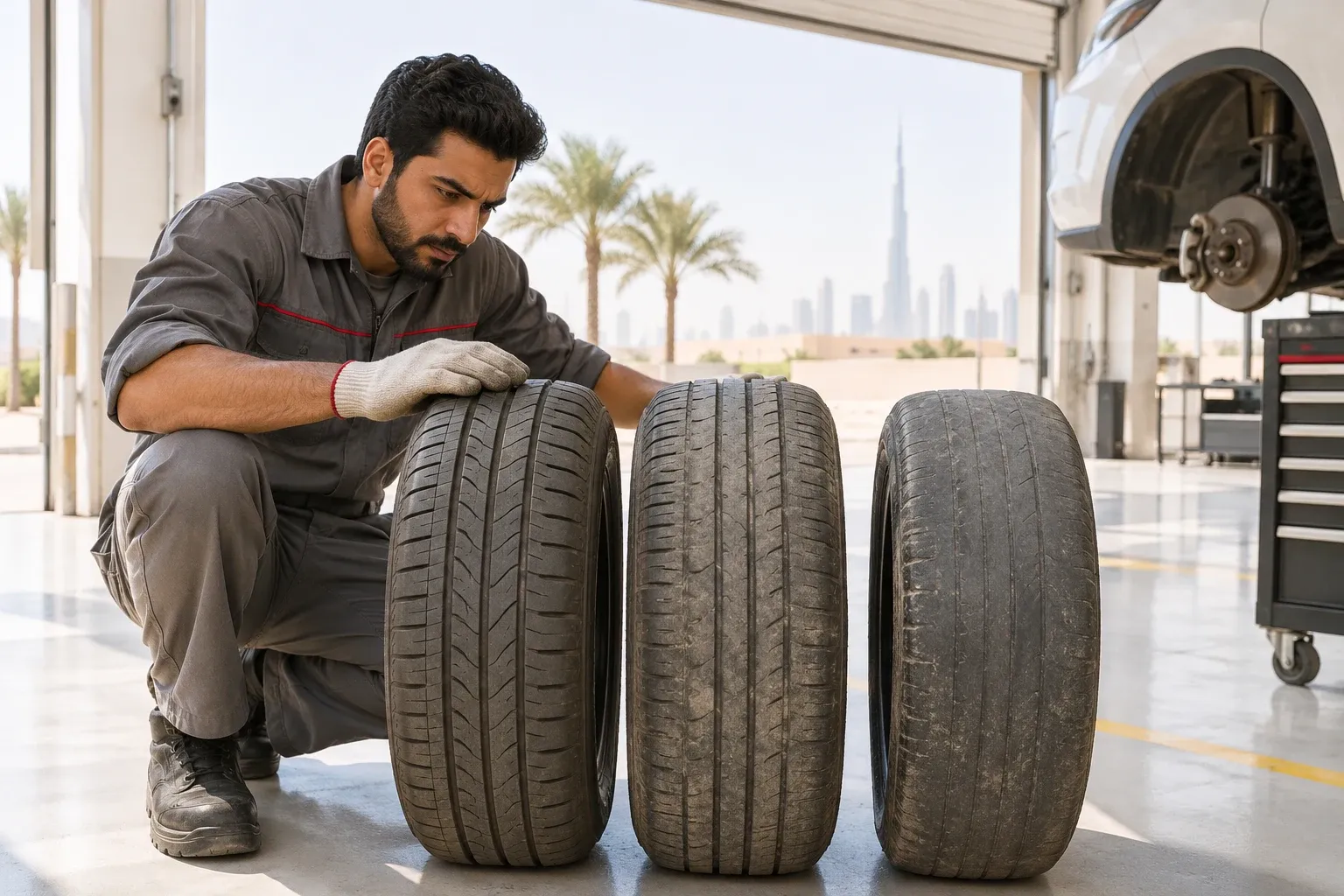
Uneven tyre wear is a message. Both shoulders worn means low pressure, a worn centre means over-inflation, one edge worn points to alignment, cupping suggests worn suspension or balance, and feathered blocks suggest a toe problem. Fix the cause before you fit new tyres.
I read tread patterns every day, and they save a lot of guesswork. A set of tyres tells me more about how a vehicle has been treated than the driver often does. Here is what each pattern means.
How to look at your own tyres
Park on level ground and turn the steering to full lock to see the front tread. Run your hand lightly across the tread, in both directions. If it feels like a saw blade in one direction, that is a sign of feathering. Use a torch and look across the whole width, and look at the inside edge, which most people never see.
Compare each tyre with the others. If every tyre wears alike, the cause is probably pressure or driving style. If one is different, look at that corner for a suspension or alignment fault.
The patterns at a glance
| Pattern | What it looks like | Common cause |
|---|---|---|
| Both shoulders worn | Outer edges bald, centre fine | Under-inflation |
| Centre worn | Middle bald, edges fine | Over-inflation |
| One edge worn | Inner or outer edge only | Alignment (camber) |
| Feathering | Blocks smooth one way, sharp the other | Toe setting out |
| Cupping | Scalloped dips around the tyre | Worn shocks, balance |
| Flat spots | Local bald patches | Hard braking, long storage |
| Heel and toe | Stepped wear on blocks | Aggressive tread, no rotation |
Now I will take each in turn.
Both shoulders worn: under-inflation
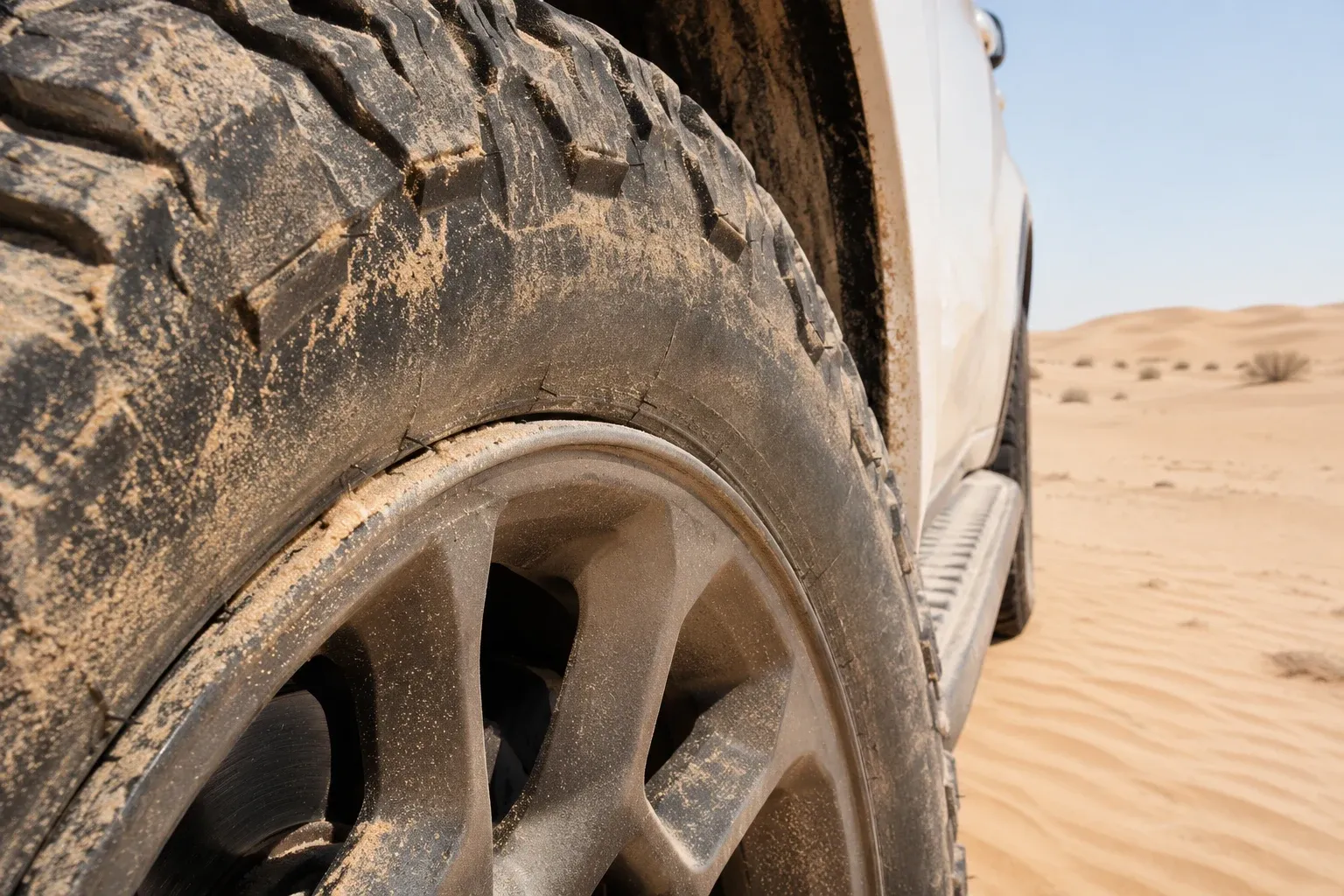
When pressure is low, the tyre sags and the shoulders carry the load. The edges wear first, and the tyre runs hotter. I see this on vehicles whose owners never check pressure, and after desert trips where the driver forgot to reinflate. The fix is simple. Set pressure cold to the door placard figure and check every few weeks. If the shoulders are already gone, the tyre may not recover its life.
Centre worn: over-inflation
The opposite case. Too much air makes the tyre crown, so only the middle touches the road. It happens when someone fills the tyre hot and uses that reading, or deliberately overinflates for fuel economy. It also reduces grip, especially in wet conditions. Set pressure cold and stay within the placard figure.
One edge worn: alignment
Wear on a single edge points to camber. The tyre leans in or out, so one side takes more load. Hitting a kerb, a deep pothole or driving off-road with a stock setting can knock the alignment. A lifted vehicle also changes geometry.
A wheel alignment starts from AED 180 per vehicle. Alignment cannot fix a bent or worn part, so I inspect the control arms, ball joints and bushes first. After a lift or a size change, alignment is a must, as noted in our post on fitting bigger tyres.
Feathering: toe out of spec
Feathered wear means the tread blocks are smooth on one side and sharp on the other, as if the tyre is being scrubbed sideways. It comes from incorrect toe, and it often appears on both front tyres. It will shorten tyre life quickly, because the tyre is dragged along the road. An alignment fixes it, if the parts are sound.
Cupping: bounce
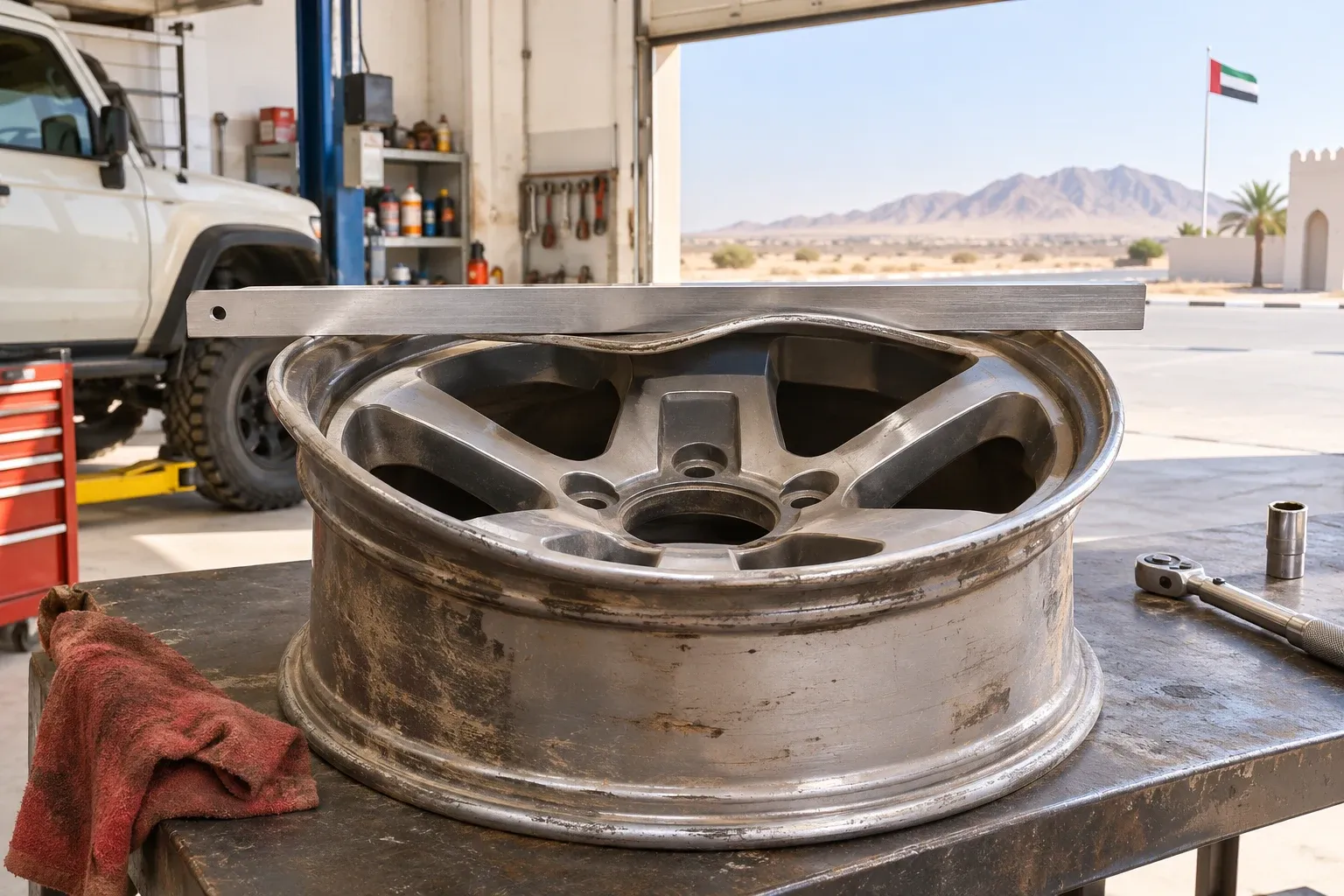
Cupping looks like a series of dips around the tyre. The cause is a wheel bouncing as it rolls. Typical reasons include worn shock absorbers, weak bushes, an out-of-balance wheel or a bent rim. The result is noise, vibration and shorter tyre life.
Check balance first, and look at the rim for bends. Our wheel balancing service from AED 120 for four wheels often cures a mild case. If the shocks are tired, replacing the tyre without fixing them just ruins the new tyre. Impact damage to wheels is another culprit, covered in repairing a bent off-road rim.
Flat spots
Hard braking can leave a local worn area, and a vehicle sitting for weeks can develop a temporary flat spot where the tyre rests on the ground. Many ease out after driving a few kilometres, but severe ones remain. In UAE heat a vehicle left standing in the sun may be worse affected. Move the vehicle now and then if it sits.
Heel and toe wear
Aggressive tread blocks wear in a stepped pattern, where one edge of each block wears faster than the other. Run your hand over the tread and feel the steps. It is common on mud-terrain tyres that are not rotated. Regular rotation slows it down, and our tyre rotation starts from AED 100 per vehicle. Compare tread types in our all-terrain vs mud-terrain guide.
What to do when you find a pattern
- Note which tyres and which edges. Write it down or take a photo.
- Check pressure cold on all four, plus the spare.
- Look for obvious damage to rims and suspension parts.
- Book alignment and balance if the pattern suggests it.
- Decide whether the tyre is still safe. If the wear reaches cords or the wear bars, replace it.
- Rotate or replace after the cause is fixed.
A tyre inspection from AED 50 per vehicle covers steps 1 to 5. I would rather you came in once than pay for another set in six months.
Is the tyre still safe?
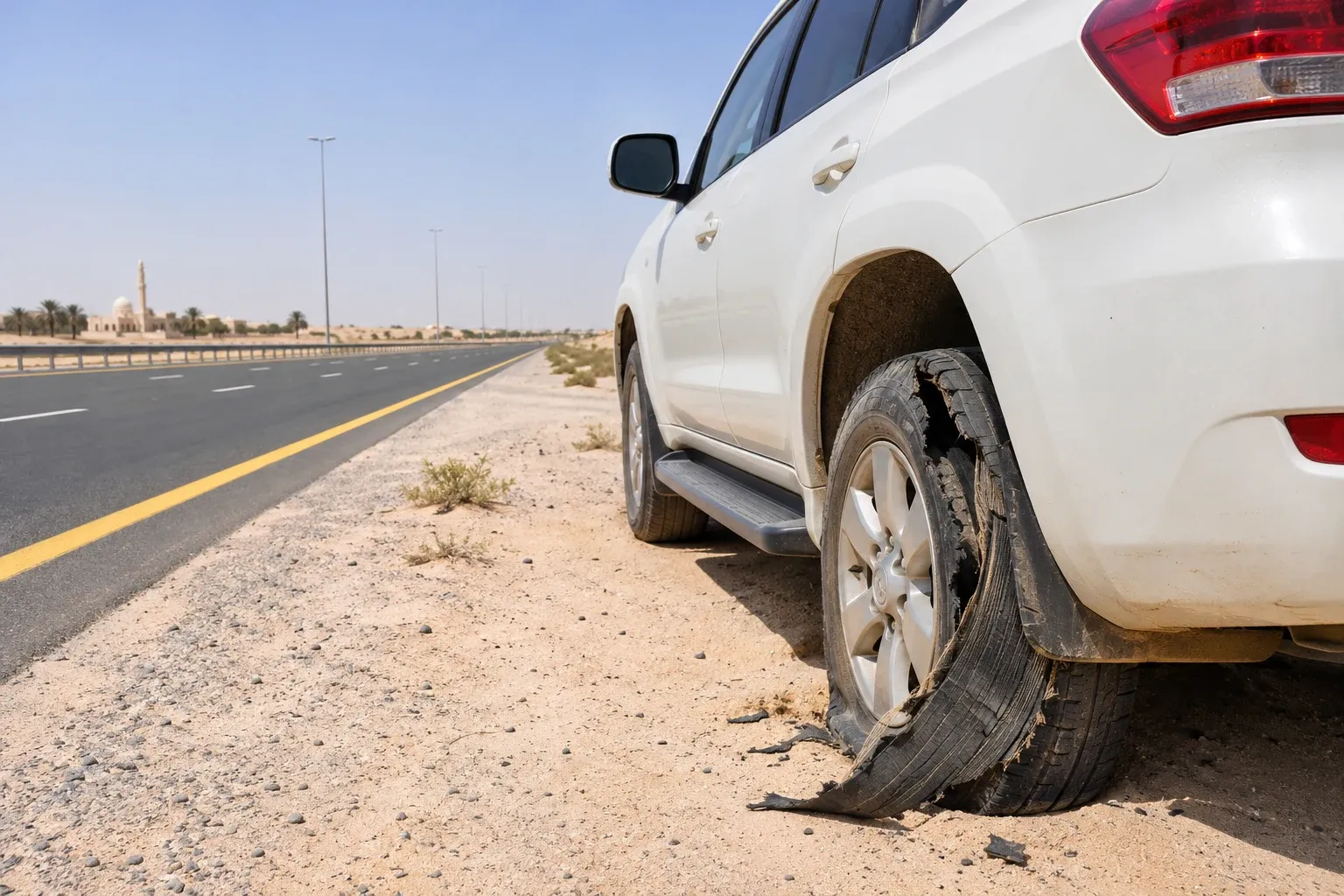
Uneven wear can leave tread deep in one part and nearly gone in another. The shallowest part decides the safety. Look for the wear bars, which show up when the groove reaches its minimum. UAE police can fine drivers for worn or unsafe tyres, and a tyre with exposed cords is unsafe on any surface.
Can I swap just two?
Sometimes. But if the cause was alignment and I fix it, I may recommend replacing the worn pair and keeping the better tyres, with the new ones on the rear for stability. On a full-time four-wheel drive, big differences in tread depth can strain the drivetrain. Read when to replace all four tyres before you decide.
Why the cause matters more than the tyre
It is tempting to treat uneven wear as a tyre problem and fit a new one. That usually fixes nothing. The tyre is the messenger. If the cause stays, the new tyre will wear in the same way, only sooner, because you have given it the same job on the same faulty geometry.
That is why I always start by asking what happened to the vehicle. Did it hit a kerb or a pothole recently? Was the vehicle lifted or fitted with different wheels? Has the driver noticed a pull or a vibration? A single answer often points straight to the cause.
I also check whether wear differs between the front and rear. Front tyres do the steering and take most braking load, so they wear differently by design. A difference between left and right is more telling, since both sides should normally match. If one side is worse, I look for a bent component or a corner that has been damaged.
Fixing the cause may cost more than a new tyre, but it saves the next set. The sums usually favour a proper diagnosis.
Takeaway
Tread wear is cheap information. Look at it each month, fix the cause the first time, and your next set will last a lot longer than the last one.