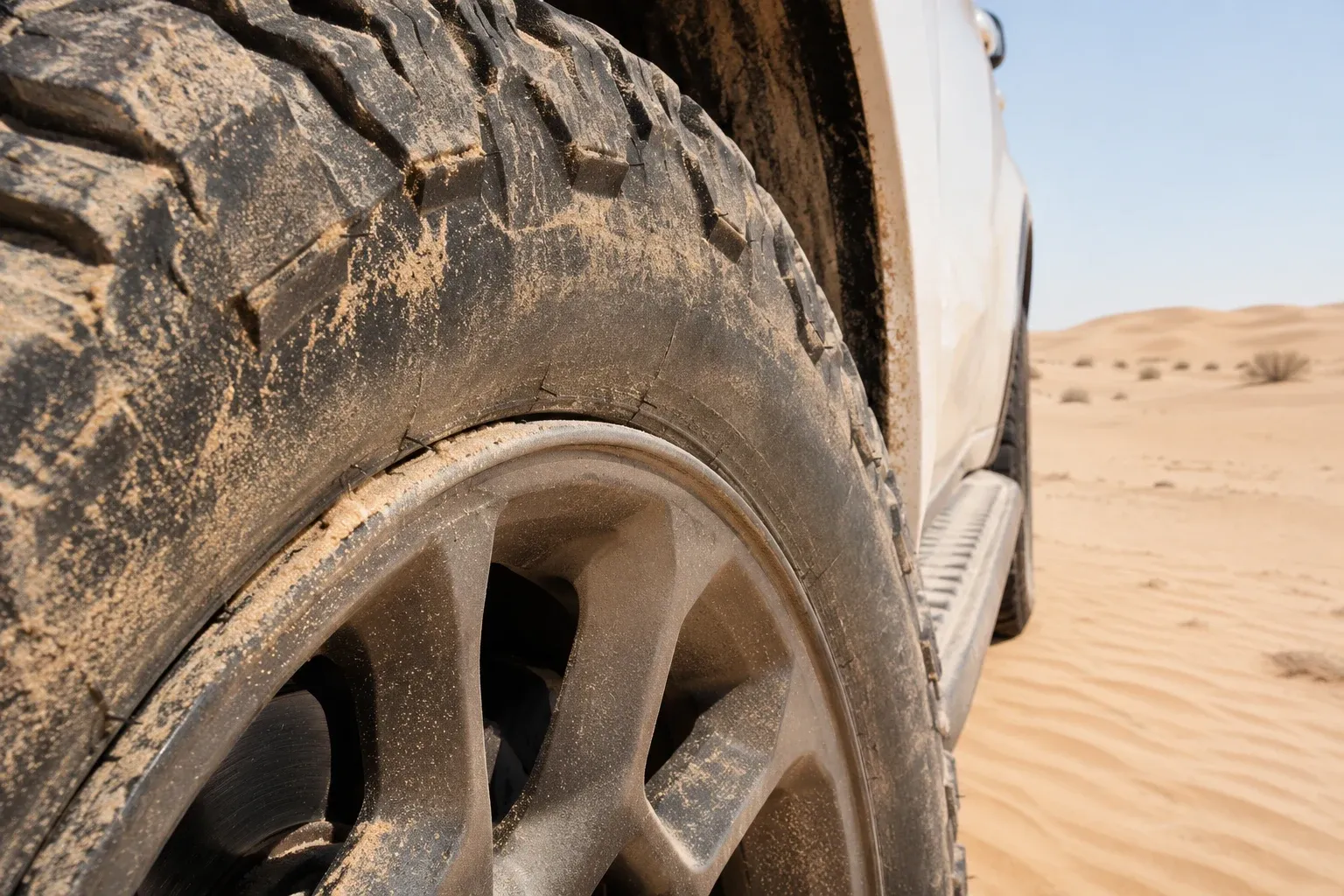
Sand gets into the tyre bead when a low-pressure tyre moves slightly on the rim in a turn or on a slope. Once there, grit stops the seal, causes slow leaks and can unbalance the wheel. The fix is to dismount the tyre, clean the rim and bead seat, and refit.
This is one of the most common desert jobs I deal with the week after a long weekend. Drivers arrive saying the tyre loses a few psi a day, and nine times out of ten the cause is sitting between the rubber and the metal.
How a tyre seals on the rim
A tubeless tyre holds air because the bead, the reinforced edge of the tyre, presses against the rim’s bead seat. At road pressure the force is high and the seal is tight. Drop the pressure for sand, and that force falls a lot. The bead can lift or slip by a small amount, especially when the tyre is loaded sideways.
Fine sand is the problem. It is fine enough to enter a gap of a fraction of a millimetre, and it flows with the air movement as the tyre flexes.
How it gets in
Low pressure with side load
Turning on a slope at 12 or 14 psi pushes the sidewall sideways. The bead on the downhill side can shift. That is the moment sand enters. Slow, wide turns reduce it.
Rolling a tyre when reinflating
When you reinflate on the dune, the bead pushes back out to its seat. If sand is already there, the bead seats over it and traps it.
Dirty rims and old corrosion
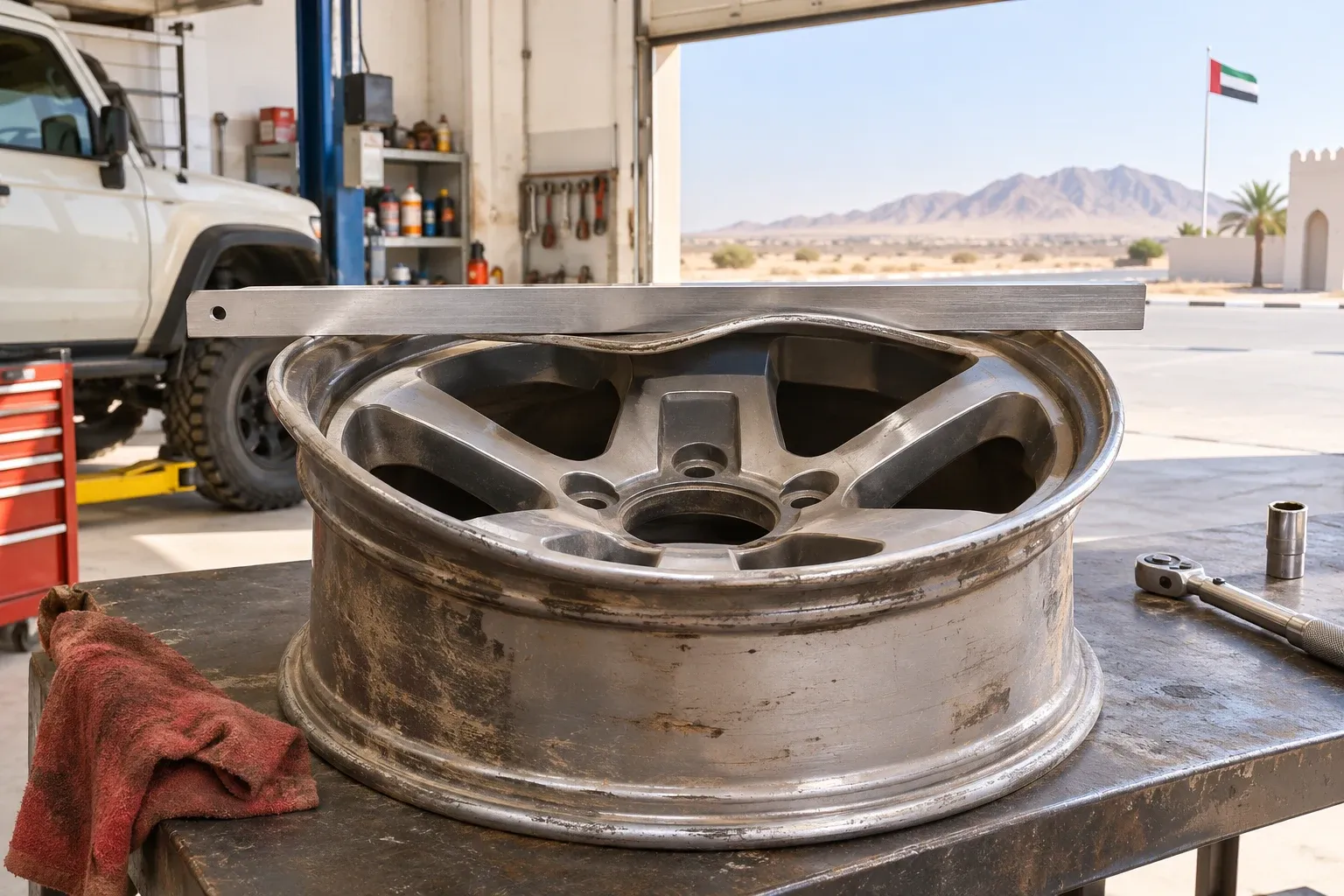
A rim with a rough or pitted bead seat gives sand a place to settle. A bent or corroded rim does not seal as well, which is one reason I look at rims before a desert trip. Our post on bent off-road rims covers when a rim can be saved.
Mounting in a dusty setting
Sand also gets in during a tyre change in the desert. A wheel laid in sand and then fitted without cleaning brings grit with it.
Signs you have sand in the bead
- The tyre loses pressure over days, not hours.
- One tyre needs topping up while the others hold.
- A vibration that was not there before the trip.
- A hiss or bubbles at the rim edge when you wet it with soapy water.
- Visible grit around the rim lip after you wash the wheel.
A soapy water test is easy. Spray the join between tyre and rim, and watch for bubbles. Bubbles at the bead line point to a seal problem. Bubbles at the valve point to the valve.
What not to do
Do not just keep topping up
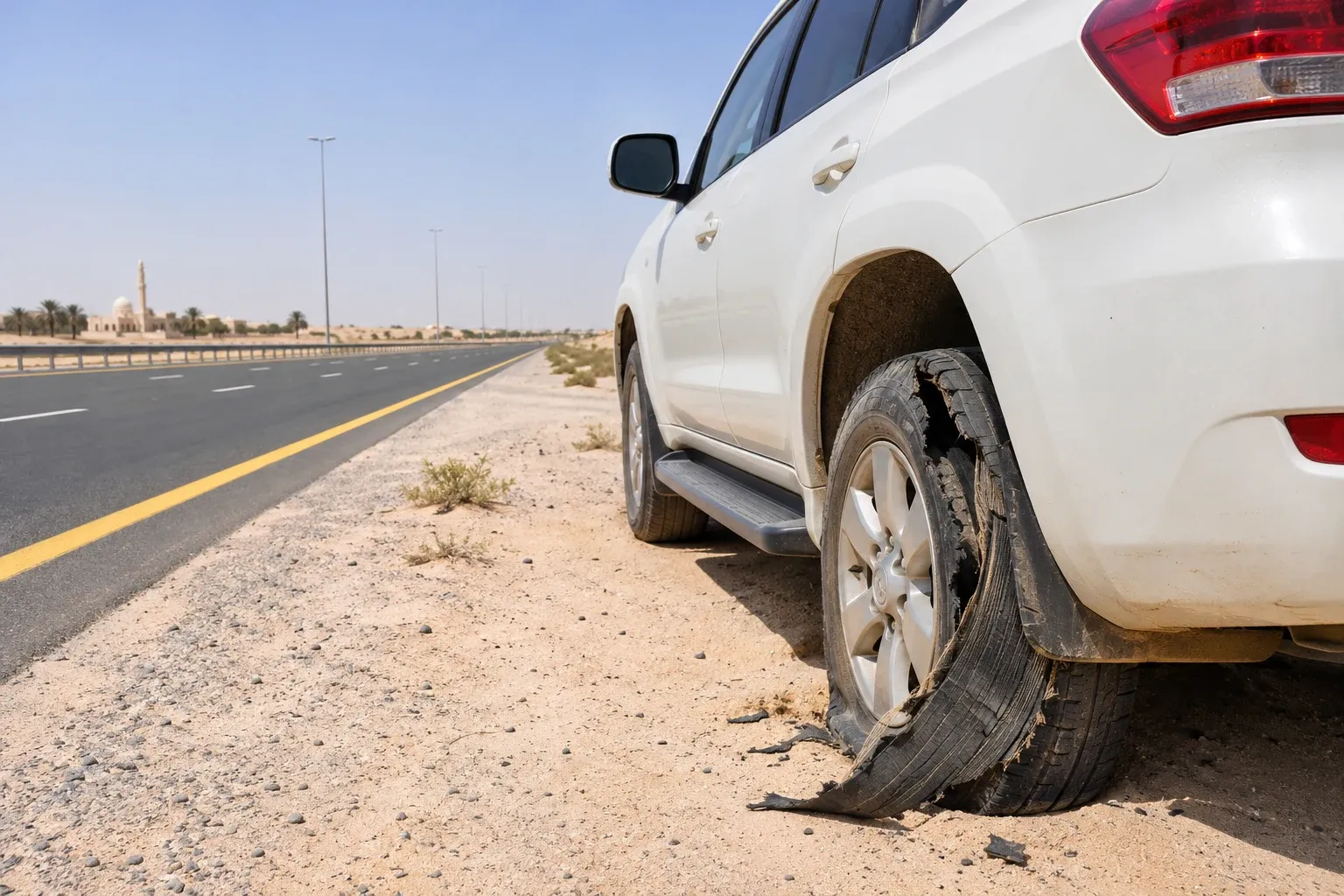
Adding air hides the problem. The seal does not heal, and the gap keeps leaking. You also run the risk of driving with a tyre lower than you think, which is dangerous at speed.
Do not use sealant as a fix
Sealant coats the inside, but it does not clean the bead. It can also make the later cleaning harder.
Do not hammer or force the bead
Some drivers try to seat the bead with a hit or a blast of compressed air in the field. It can damage the tyre, the rim or you. Leave it for a workshop.
How we fix it
The correct repair is straightforward and takes a short time with the right machine.
- Deflate the tyre fully and break both beads.
- Dismount the tyre from the rim.
- Clean the bead seat and the tyre bead with a brush and wipe, removing sand and corrosion.
- Inspect the rim for dents, bends and pitting.
- Inspect the inside of the tyre for sand, damage or cuts.
- Refit with fresh lubricant and a new valve or core if needed.
- Inflate, check the seal with soapy water, and balance.
A tyre change starts from AED 60 per tyre, and the price moves with size and rim. Balancing, from AED 120 for four wheels, is part of the job, because sand left in the tyre throws the wheel off. See our tyre change service for details. If a rim has pitting or dents on the bead seat, a rim repair from AED 220 per rim may be needed before the tyre can hold air.
When the tyre itself is the issue
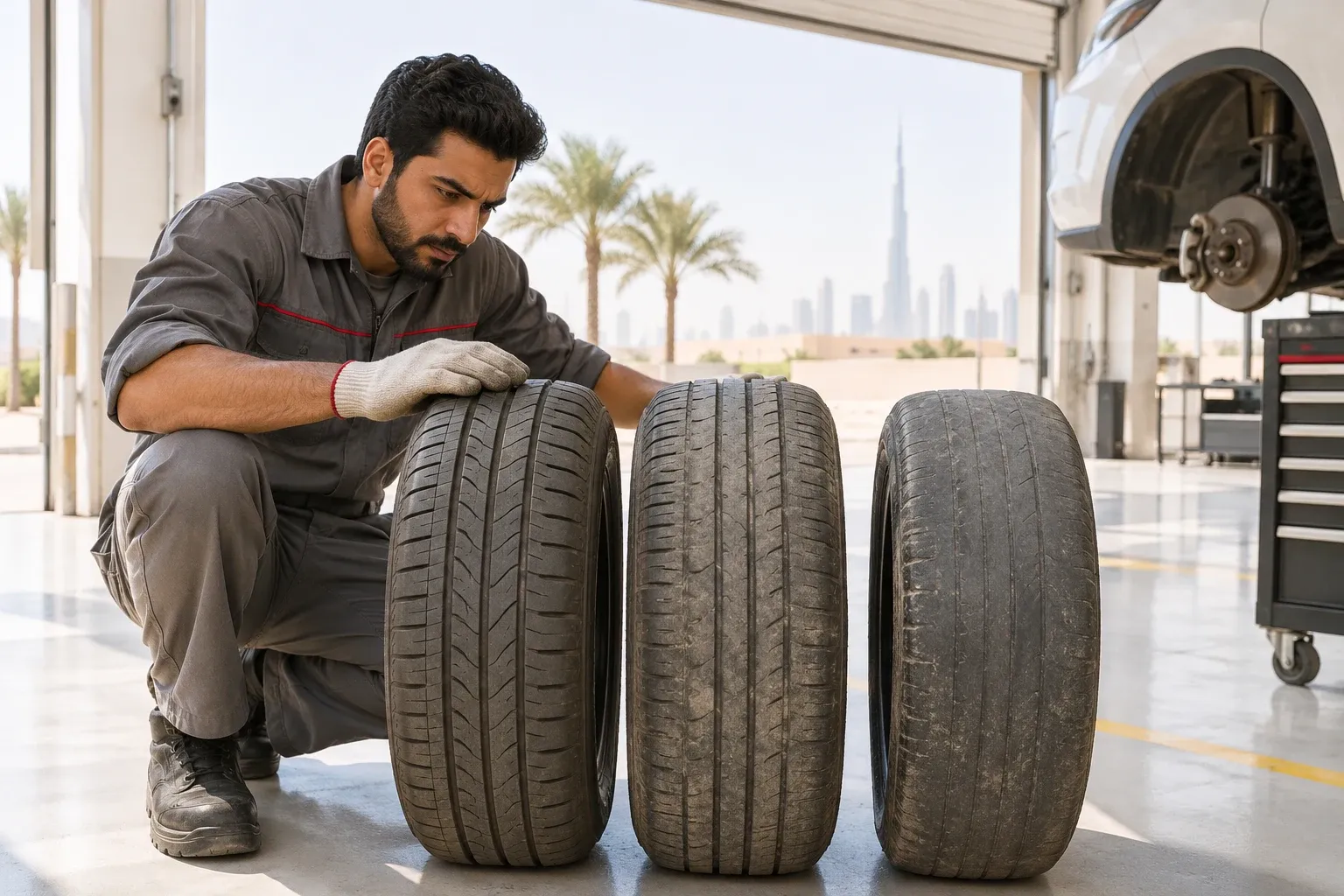
Sometimes sand is not the whole story. While the tyre is off, I check the inner liner for damage from low-pressure driving, such as creasing or abrasion. If the tyre was run flat and driven on, I do not trust it for repair. That goes beyond sand in the bead, and a puncture in the sidewall or shoulder can never be repaired.
Prevention
A few habits cut the risk a lot.
- Keep pressure above 12 psi unless you truly need to go lower.
- Slow down before turning on side slopes.
- Clean the rim lip before you reinflate in the field. A quick brush of the bead area helps.
- Use rims in good condition, with no corrosion on the bead seat.
- Consider beadlock rims for heavy low-pressure use. They are a specialist choice, not a requirement.
- Wash wheels after a trip and look at the rim edge.
Our guide to tyre pressure for dune bashing gives sensible starting points, and our Desert Tyre Prep service, from AED 150 per vehicle, checks beads and rims before you go.
A typical case from the workshop
A common story goes like this. A driver spends the weekend on the dunes at 14 psi, reinflates at the edge of the sand with a portable compressor, and drives home. Two days later the front right tyre is down by 6 psi. They top it up, and it drops again. On the third day they bring it in.
We lower the pressure, break the bead and find a thin line of fine sand packed along the rim seat. The tyre looks fine from outside. Nothing is punctured. Once the rim and bead are cleaned, the tyre is refitted and balanced, and it holds pressure for weeks.
Sometimes the story has a second part. While the tyre is off I find a small nick in the rim lip, where a rock caught it, and the sand collected around that. A small dent in the rim lip can prevent a perfect seal. Fixing both the dent and the grit solves the leak for good.
The point is that a slow leak after a desert trip is not always a puncture. Bring it in early, and the fix is a clean and a refit instead of a replacement tyre.
When to call us
If a tyre keeps losing pressure after a trip, bring it in or call. If you are stuck in the desert with a tyre that will not hold air, reinflate to get out if you safely can, then drive gently on to a workshop. Mobile fitting, starting from AED 150 per call-out, is possible where a van can reach you.
I would rather clean a bead for a small fee than see a driver lose a whole tyre to a problem that was fixable the day it started.