In UAE summer, set tyre pressure cold every two weeks, check the date code, inspect sidewalls for cracks, rotate on schedule and park in shade when you can. Do those five things consistently and most of the heat-related tyre trouble I deal with every August simply never starts.
This is the routine I give drivers in June, and it works for any 4x4, SUV or pickup. It does not need tools beyond a gauge, and a technician can do the lot in a short visit.
The five-step routine
- Check pressure cold.
- Read the date code.
- Inspect the sidewalls and tread.
- Rotate and balance on schedule.
- Protect from sun and overload.
I will go through each step, with the reasoning, so you can judge how much effort you need.
Step 1: Check pressure cold
Pressure matters more in summer, because a low tyre runs hotter and wears faster. Use the pressure on your door placard. Check in the morning or after the vehicle has stood in shade, not after a drive.
Pressure rises about 1 psi for every 5 to 6 degrees Celsius. A tyre set correctly at 8 am can read several psi higher by afternoon on hot tarmac. That is normal. Do not release air to bring a hot reading back to the placard figure, because the tyre will be low once it cools.
Check the spare too. It slowly loses air and is easy to forget. A tyre pressure check starts from AED 30 per vehicle if you want a technician to do it.
Step 2: Read the date code
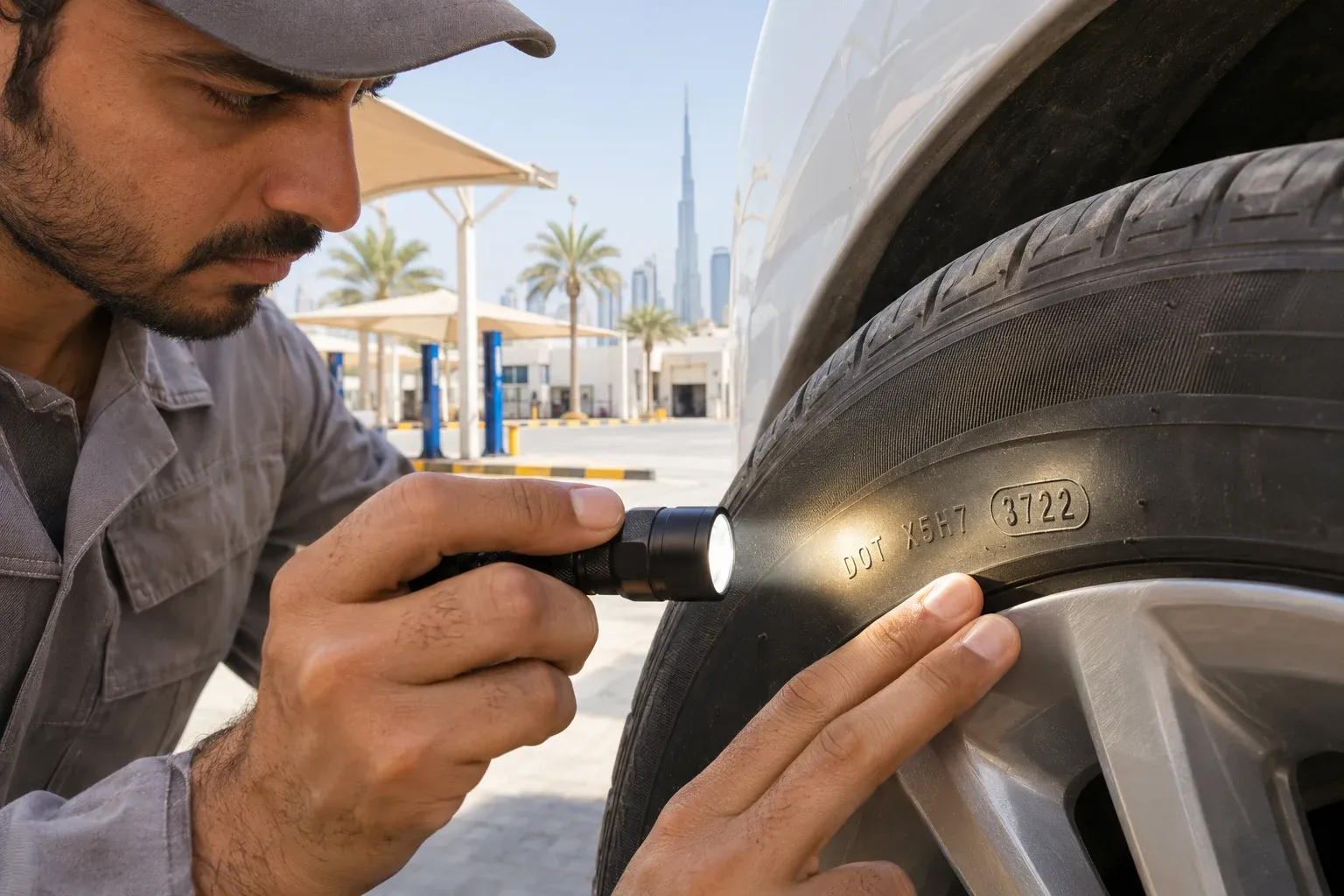
Heat ages rubber faster. A tyre that looks fine can have internal ageing. Most makers advise inspection from 5 years and replacement by 10, and UAE heat often shortens this. Find the four-digit code after the letters DOT on the sidewall and work out the age. Our guide to reading the tyre date code shows how.
If any tyre is over five years old, plan to have it inspected before the hottest months.
Step 3: Inspect sidewalls and tread
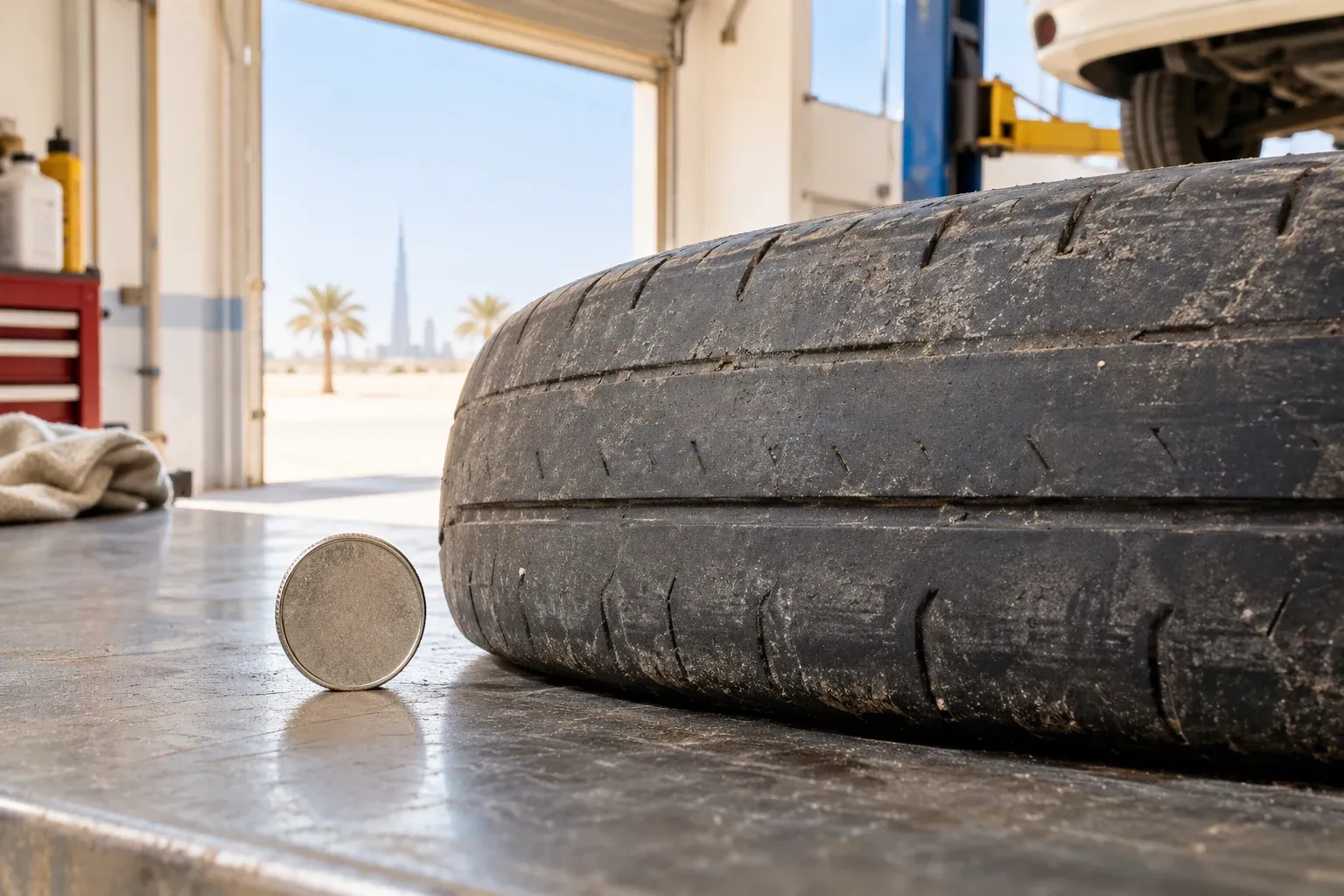
Walk around the vehicle with a torch. Look for:
- Cracks in the sidewall rubber or between tread blocks.
- Bulges or blisters.
- Cuts or scuffs from kerbs.
- Stones or screws lodged in the tread.
- Uneven wear on one edge or in the centre.
- Damaged valve stems or missing caps.
A bulge means internal damage and the tyre must be replaced. Uneven wear is a clue, so see our post on uneven tyre wear patterns for what each pattern means. A tyre inspection from AED 50 per vehicle covers all of this.
Step 4: Rotate and balance
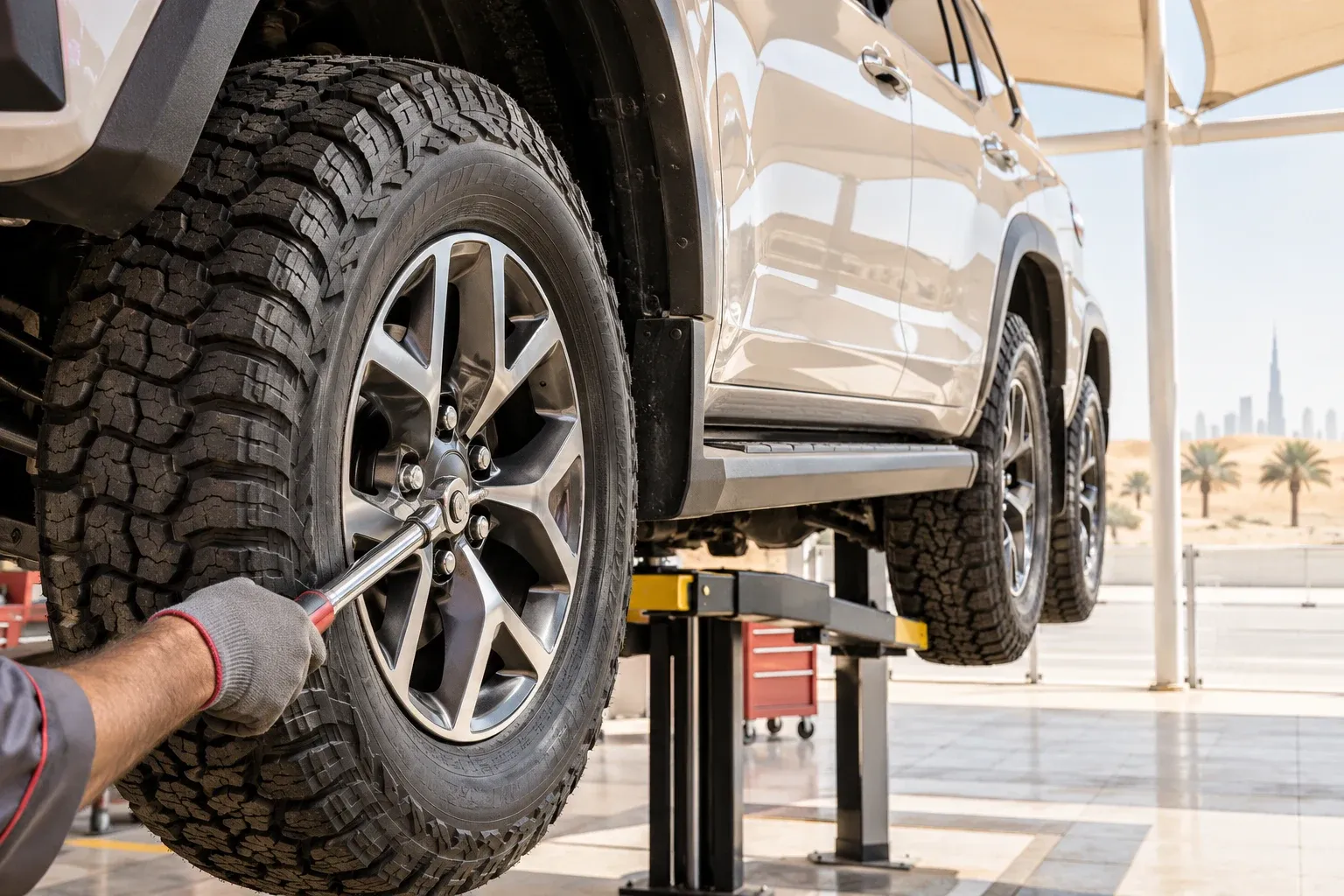
Rotation evens out wear across the set. Front tyres on a four-wheel drive often wear differently from the rears, and heat speeds up any imbalance. I advise rotating at regular intervals, commonly every 8,000 to 10,000 km, or sooner if wear looks uneven. A tyre rotation starts from AED 100 per vehicle.
Balance matters in summer because a vibration at 110 km/h puts extra stress on the tyre and the suspension. If the steering wheel shakes at speed, book wheel balancing, which starts from AED 120 for four wheels. Check alignment as well if the vehicle pulls to one side.
Step 5: Protect from sun and overload
Sun exposure
A vehicle parked in direct sun for days gets hot tyres that never fully cool. UV and heat harden the rubber. If you travel and leave the vehicle standing, shade or a covered spot helps. Move the vehicle a little now and then, so one section of the tyre does not carry the load for weeks and flat-spot.
Overload
Know your load index. A pickup with a canopy, a fridge and passengers can exceed what the tyre is built for. Reduce weight, or choose a higher load rating at your next replacement. Towing needs particular care, and our post on tyres for towing and camping goes into it.
Speed on long runs
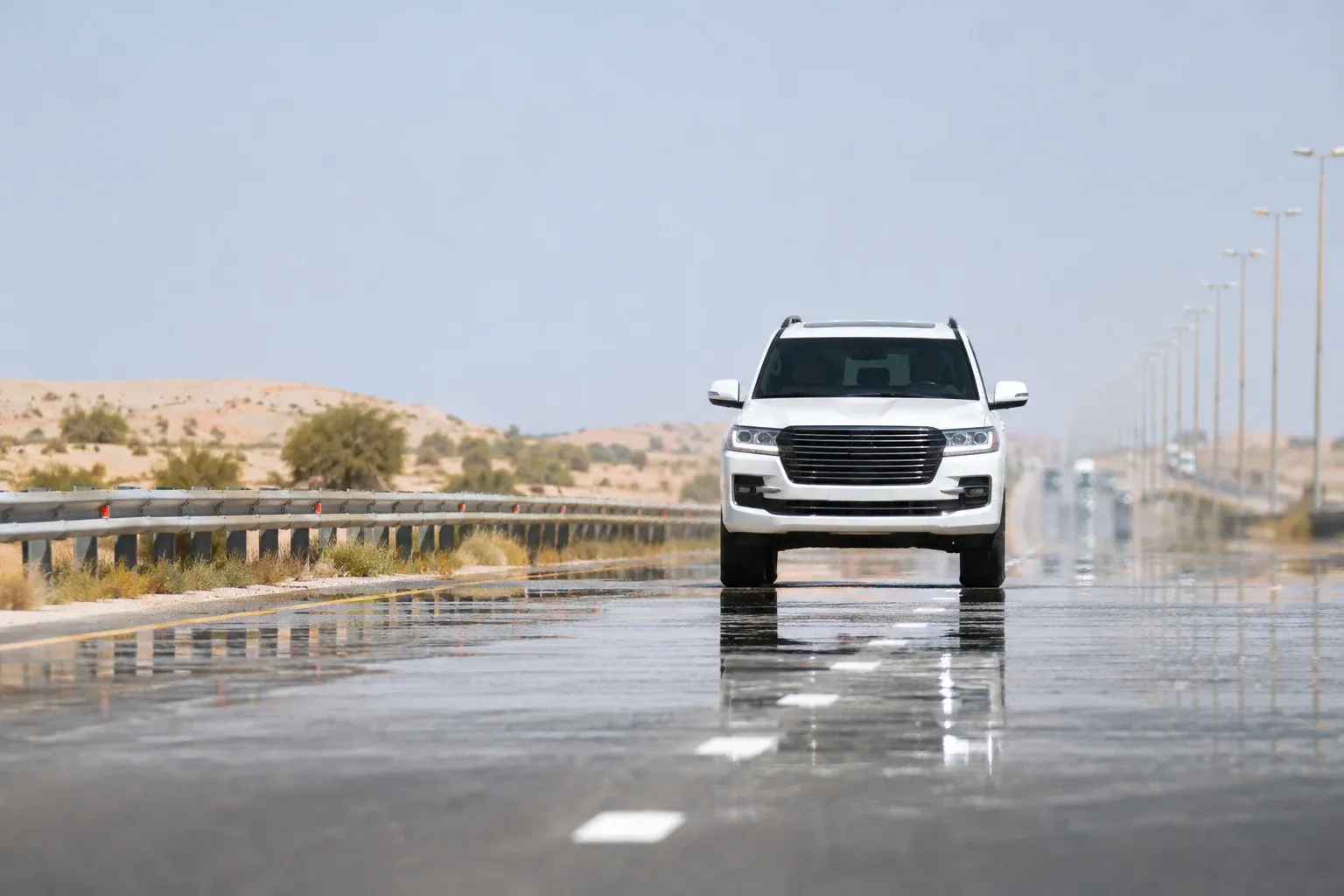
Sustained high speed on E11 or E311 in midday heat builds heat steadily. A short break on a long run lets tyres cool and gives you a chance to check for any odd smells or vibrations.
What I see go wrong each summer
The forgotten spare
A spare that has not been checked for two years is low or perished. It sits ready in the photo, and useless in the moment.
The slow leak ignored
A tyre dropping a few psi a week usually has a cause, such as a nail, a leaking valve, or a bead problem. Heat turns that small leak into a hot, under-inflated tyre. Find the cause. Our puncture repair starts from AED 70 per tyre for tread punctures.
The old set left on too long
Tread depth looks fine, so the tyres stay on for seven or eight years. Heat has already weakened the structure. See how long 4x4 tyres last in the UAE.
Mismatched pressures after a desert trip
Drivers forget to reinflate fully after sand and drive home on tyres still low. That causes heat build-up right when the road is hottest.
A simple summer schedule
| When | What to do |
|---|---|
| Every two weeks | Check pressure cold on all five tyres |
| Monthly | Walk-round for cracks, bulges and debris |
| Every 8,000 to 10,000 km | Rotate and check balance |
| Before June | Read date codes, inspect sidewalls, check alignment |
| After any desert trip | Reinflate, inspect, clean wheels |
If something goes wrong
A flat tyre help call-out starts from AED 120, and our vans cover Dubai, Abu Dhabi and Sharjah 24/7. Do not drive on a flat tyre to reach a nicer place to stop, since the damage rises with every metre. If a tyre bursts at speed, hold the wheel firmly, ease off the throttle and slow gradually.
Our post on why tyres burst in UAE summer explains the causes in more depth.
A look at what is different in September
The hottest weeks may be behind you by autumn, but the tyres remember them. September and October are the right time for an inspection, since the damage from July and August is now visible. Cracks may have opened, and slow leaks may have started.
It is also the start of desert season for many drivers, as temperatures drop and dune trips become pleasant. That makes it a good moment to check beads, rims and spares before the first big weekend. A tyre that coped with summer commuting may struggle with the added flex of low-pressure sand driving.
Treat the end of summer as a reset. Read date codes again, set pressure cold on all five, rotate if the interval is due, and replace anything that looks tired. It is easier to do this at a calm moment than during a roadside call. Our vans stay busy through the heat, and many of those calls could have been avoided with a check a few weeks earlier.
Keep the habit through winter as well. Pressure drops a little as the weather cools, and a tyre that was perfect in August can be a few psi low by December.
Final note
None of this is expensive. Most of it is a gauge and ten minutes. Drivers who do it commonly avoid the roadside calls that fill my phone in July and August. Start today, and put a reminder in your calendar for the next check.