A 4x4 tyre in the UAE usually needs a serious check at 5 years and replacement by 10, and heat often brings that forward. Mileage matters, but age, pressure, load and how you drive decide the real life of a set. Tread depth alone can mislead you on an older tyre.
People ask me for a number of kilometres. I understand why, but I would not trust anyone who gives you one without seeing the tyres. Here is how I actually judge it.
Age comes first
Rubber hardens and cracks over time, and heat speeds it up. A tyre that has lived five summers in Dubai has been through conditions that would take longer elsewhere. Parked cars in direct sun and hot garages make it worse.
Most tyre makers advise an inspection from 5 years and replacement by 10. In the UAE I treat that as the outer limit, not the plan. A tyre at seven or eight years with plenty of tread can still be unsafe because the internal structure has aged.
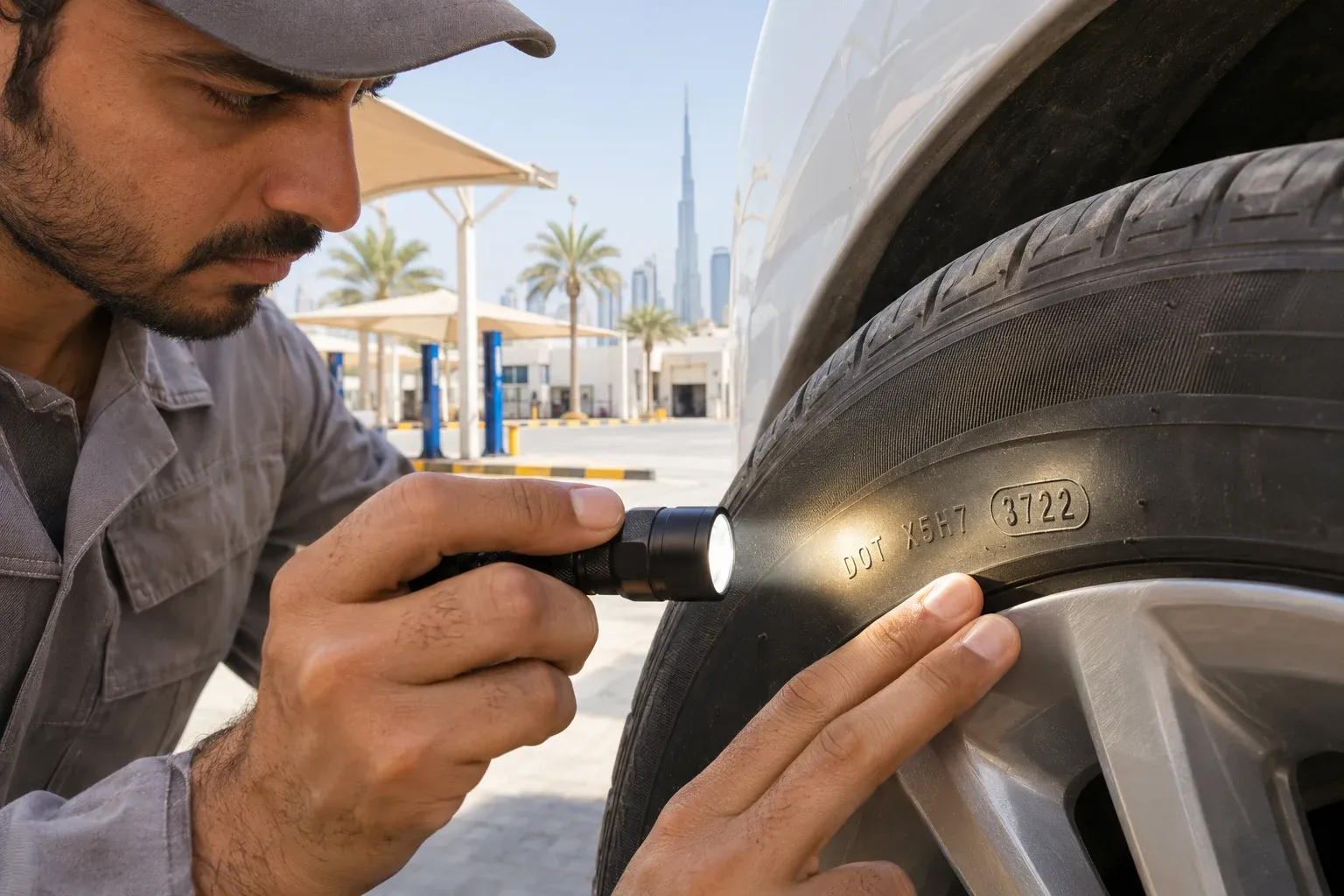
You can find the age on the sidewall. Our guide to reading the tyre date code takes two minutes and is worth doing today.
What wears a tyre out faster here
Heat
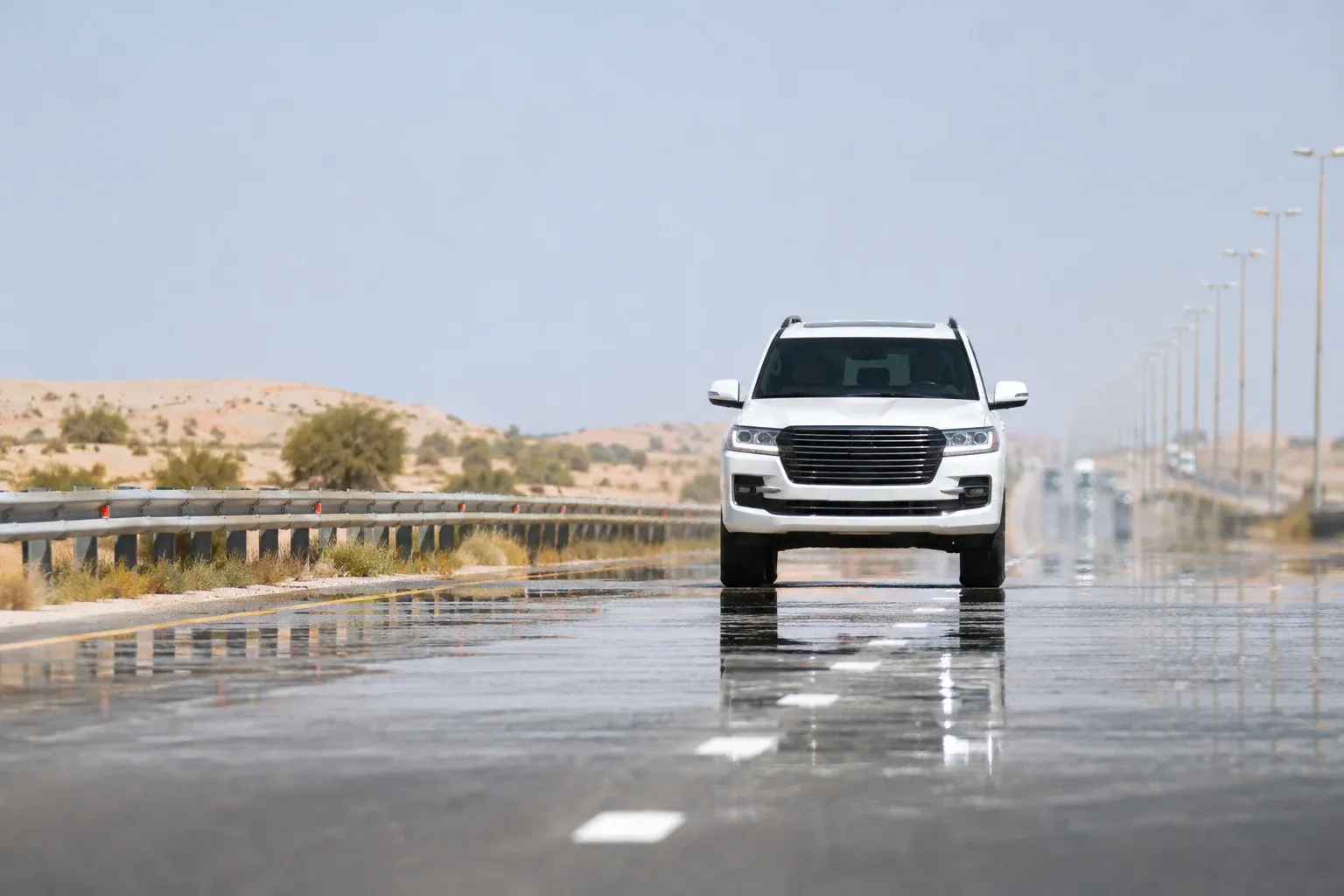
Hot tarmac raises tyre temperature well above the air temperature. The compound softens, the tread wears faster, and the carcass ages. Heat also pushes up pressure, so a tyre that was correct at 7 am is over-inflated by 2 pm. Pressure rises about 1 psi for every 5 to 6 degrees Celsius, which is why I always set pressure cold. Our post on why tyres burst in UAE summer covers the failure side of this.
Load and towing
A fully loaded Land Cruiser or a Hilux with a canopy and camping gear works its tyres harder. Higher load means more flex and more heat. Check the load index on the sidewall matches what you carry.
Wrong pressure
Under-inflation wears both shoulders and builds heat. Over-inflation wears the centre. Both shorten life. The door placard gives the correct road pressure for your vehicle, and checking it monthly costs almost nothing.
Alignment and suspension
A vehicle that has hit a kerb or a pothole may run out of alignment. A small error shows as a tyre that wears flat on one edge long before its time. A wheel alignment alone will not fix a worn suspension part, so I check both.
Desert use
Sand itself is not very abrasive on the tread, but low-pressure driving flexes the sidewall, and sharp rock or thorn can cut. After a desert weekend I look at sidewalls and shoulders before the tread.
Signs a tyre is finished
Look for these on each tyre, not just the front pair.
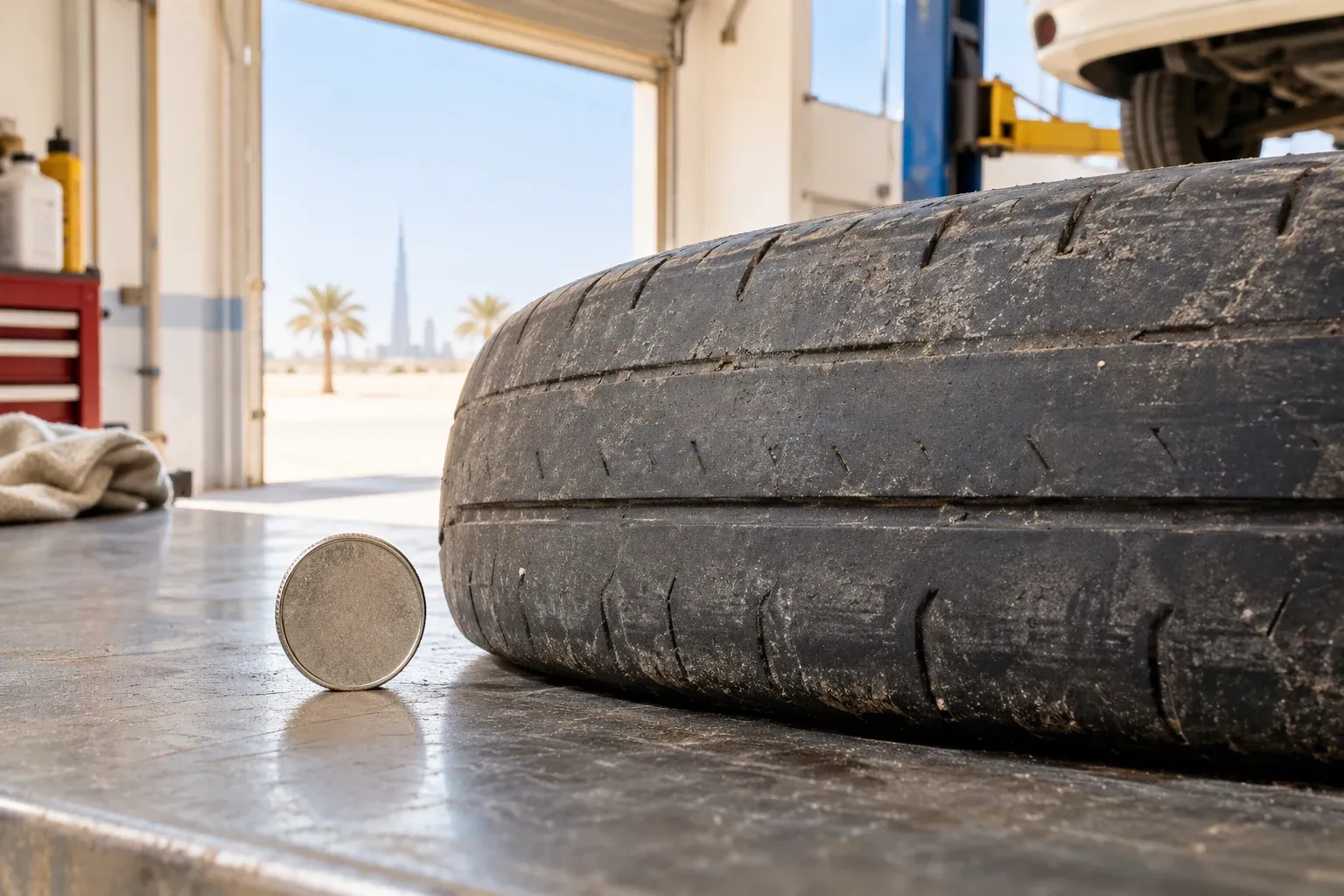
- Tread at or near the wear bars moulded into the groove.
- Cracks in the sidewall or between the tread blocks.
- Bulges or blisters on the sidewall.
- Vibration that does not go away after balancing.
- A date code older than the age you are comfortable with.
- Patchy or cupped wear across the tread.
Any bulge means replacement, not repair. UAE police can fine drivers for worn or unsafe tyres, and more importantly an old tyre can fail at highway speed.
Wear types and what they tell you
Wear patterns point to the cause. I explain them in more detail in a separate post on uneven tyre wear patterns, but the quick version is below.
| Pattern | Likely cause |
|---|---|
| Both shoulders worn | Under-inflation |
| Centre worn | Over-inflation |
| One edge worn | Alignment error |
| Cupped or scalloped | Worn suspension or poor balance |
| Feathered blocks | Toe setting out |
Fixing the cause matters more than replacing the tyre, otherwise the new set wears the same way.
Tyre type changes the answer
An all-terrain tyre normally lasts longer on road than a mud-terrain, because the compound and block design are less aggressive. A highway-terrain tyre often lasts longest if you rarely leave tarmac. Heavier load ratings and tougher compounds can add life, but not unlimited life.
Cheaper tyres are fine in many cases. If you drive mostly in the city and want a sensible set, a mid-range tyre in good condition beats a premium tyre that is six years old. I would say so even when it costs me a sale.
How to get the most from a set
- Check pressure cold every month and before long trips.
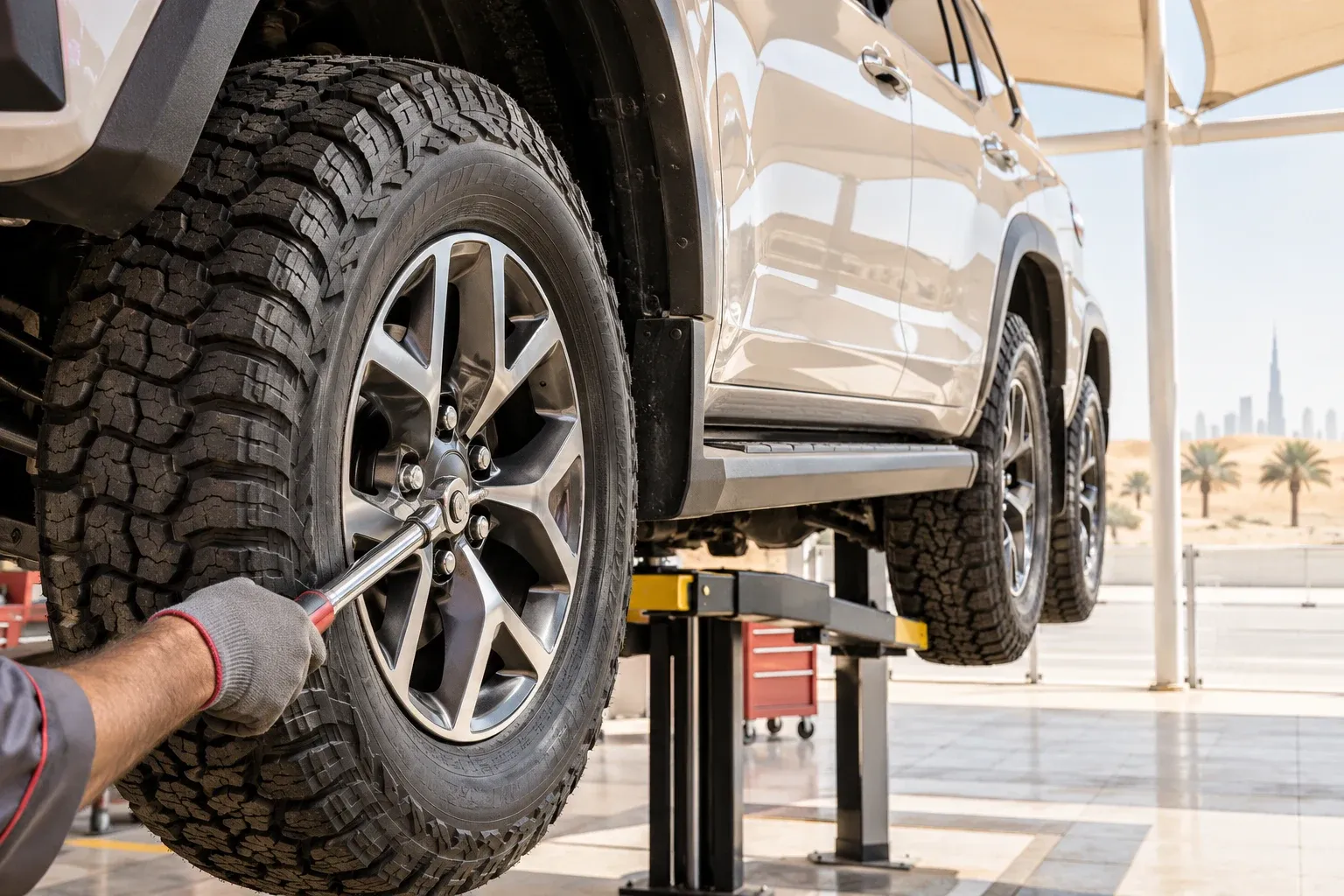
- Rotate regularly. Our tyre rotation starts from AED 100 per vehicle.
- Keep alignment right after any big impact.
- Reinflate after desert trips and recheck.
- Park in shade when you can.
- Inspect sidewalls after rock or kerb contact.
None of this is complicated. Drivers who do it commonly get several more months of useful life than drivers who ignore their tyres until a warning light appears.
Replace all four or just two?
When the tread is uneven between front and rear, I often advise replacing as a set, particularly on four-wheel drive where a difference in rolling diameter can strain the drivetrain. There are exceptions, and I cover them in when to replace all four tyres.
What it costs
Tyre replacement starts from AED 390 per tyre, fitted. Price moves with size, brand, load rating, rim diameter and location. Big sizes such as 285/60 R18 or 275/70 R18 cost more than a common 265/65 R17. A free look from a technician is easier than guessing.
How different drivers get different results
Two owners of the same vehicle can see very different tyre life. One drives short city trips, with frequent stops and low average speed, and keeps the vehicle in a shaded basement. The other drives long motorway runs in daytime heat and parks outdoors. The second set works under far more thermal stress.
The first owner might face an ageing problem before a wear problem. The tyres still look good, but they are old and the rubber has hardened. The second owner wears the tread sooner, but may replace the set before age becomes the limit. Both need the same habit: look at the tyres, not only the odometer.
I also see the effect of seasonal habits. A family that travels out of the country for a month each summer leaves the vehicle parked, often outside. When they return, the tyres have flat spots and perished rubber. Moving the vehicle occasionally, or asking someone to do it, helps a lot, and so does setting pressure correctly before you leave.
There is no honest shortcut. Look at age, look at wear, look at condition, and treat the worst of the three as the answer.
Keep a simple record
Write down the date you fit a set, the odometer reading, and the date codes. Add the date of each rotation and alignment. A note on your phone is enough. When something feels wrong later, that record tells a technician a great deal, and it stops you guessing how old the tyres are.
My rule of thumb
If a tyre is over five years old, check it carefully each season. If it is over eight in UAE conditions, I would replace it even with good tread. If the tyre is younger but shows cracks, a bulge or heavy uneven wear, replace it now. Anything in between, keep an eye on it and let a technician look at the sidewalls at your next service.