For wadi tracks, choose a tyre with strong sidewalls and cut-resistant rubber, keep pressure only slightly below road figures, drive slowly over rock, and inspect sidewalls and rims afterwards. Wadis hurt tyres through cuts and impacts, not through the soft-sand flotation problem that dunes bring.
Many drivers take their dune habits into the mountains and get a nasty surprise. A wadi is a different job for a tyre, and getting it right starts before you leave the garage.
How a wadi differs from a dune
On a dune the tyre floats. In a wadi the tyre grips, absorbs impacts and gets cut. The enemies are sharp rock, loose boulders, steep stepped sections and, after rain, running water.
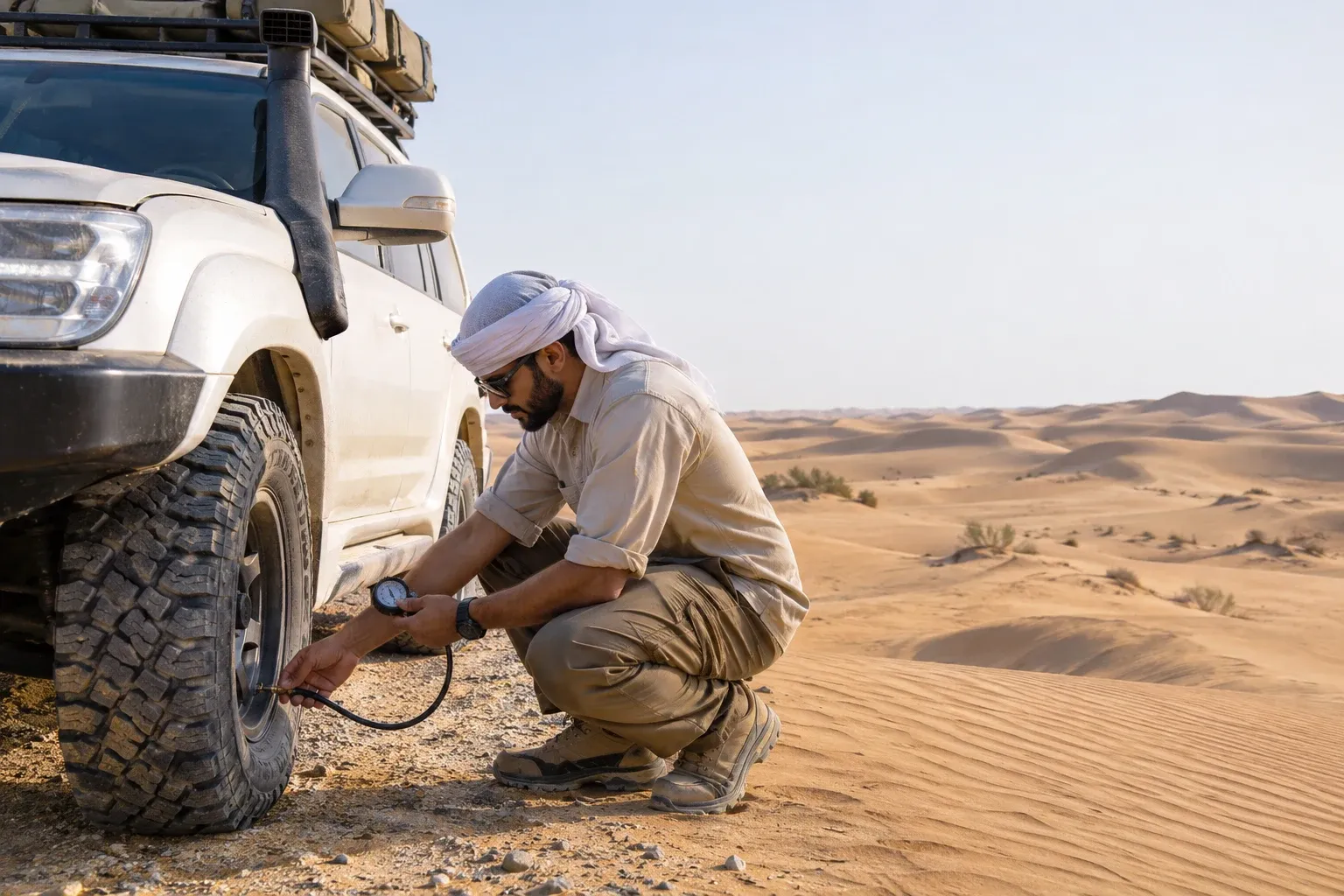
Because of that, the logic of pressure flips. Soft sand rewards low pressure. Rock punishes it, since a soft tyre lets the sidewall hit stone and pinch against the rim. I keep wadi pressure close to road pressure, sometimes a few psi lower for grip on loose gravel.
Choosing a tyre for the mountains
The right tyre depends on how rough your tracks are.
| Track type | Suggested tyre | Why |
|---|---|---|
| Graded gravel to a picnic spot | All-terrain | Good all-round grip, quiet on the road |
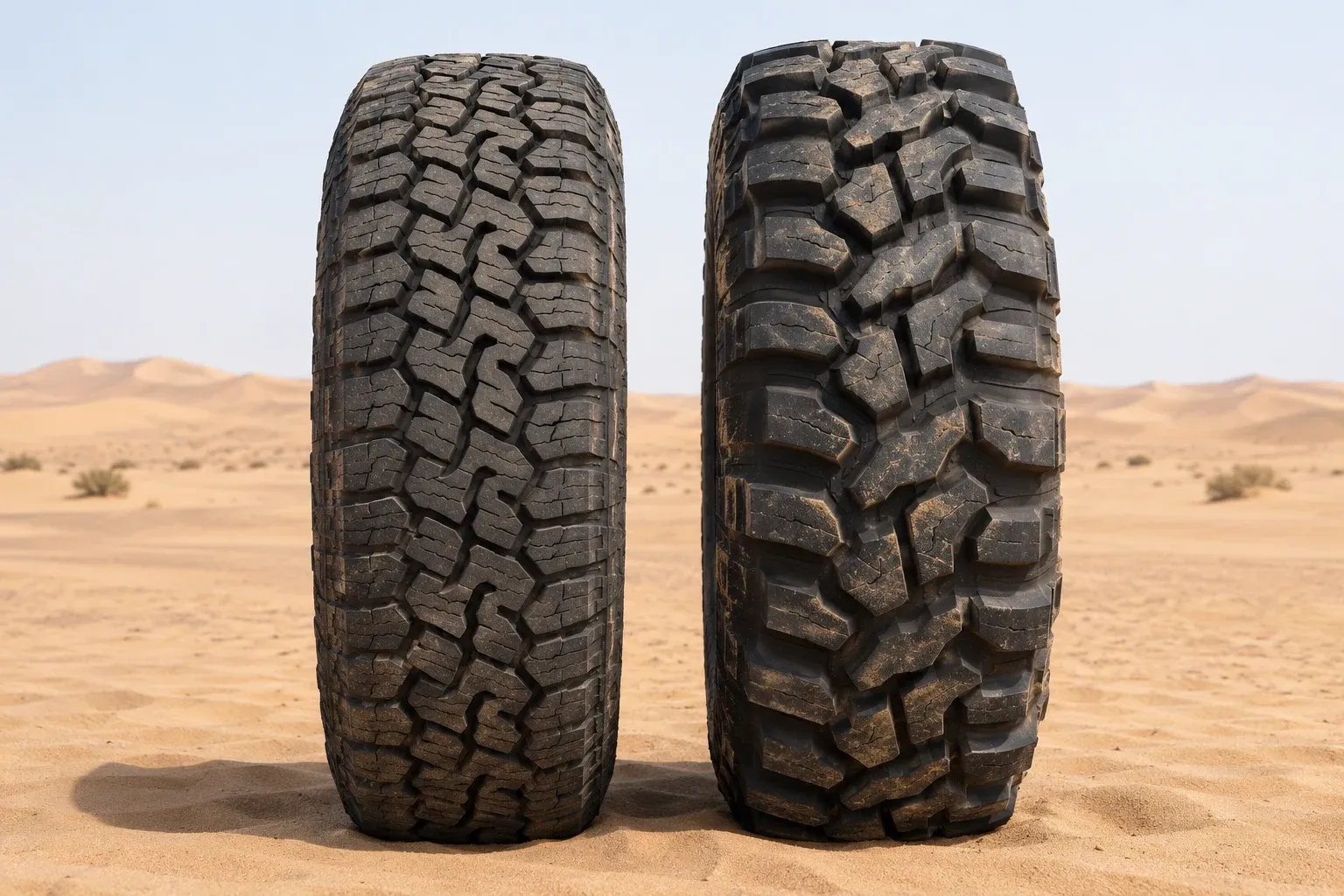
| Mixed gravel and rock | Rugged-terrain or strong all-terrain | Tougher sidewalls |
| Rough, rocky, steep tracks | Mud-terrain | Deep lugs and strong carcass |
| Mainly tarmac with a short track | Highway-terrain | Fine if the track is easy |
Look at the sidewall construction, not only the tread. A tyre with a reinforced sidewall and a decent load rating takes a rock hit better. Read about all-terrain tyres and rugged-terrain tyres to see which suits you.
Tall sidewall tyres generally cope better than low-profile tyres on 20-inch rims, because the sidewall can absorb the blow. If you drive a luxury SUV on big wheels, think carefully about wadi tracks.
Pressure for a rocky track
On the approach road
Use road pressure. Dropping early only wears the tyre and adds heat.
On loose gravel
A small drop, perhaps 3 to 5 psi under placard, can help grip and ride comfort. I would not go further without a reason.
On rock
Stay near road pressure. A low tyre can pinch and cut. Move slowly, pick your line and look at where the tyre will land.
Always reinflate to the door placard figure before returning to tarmac. For a comparison with sand figures, see tyre pressure for dune bashing.
Water crossings
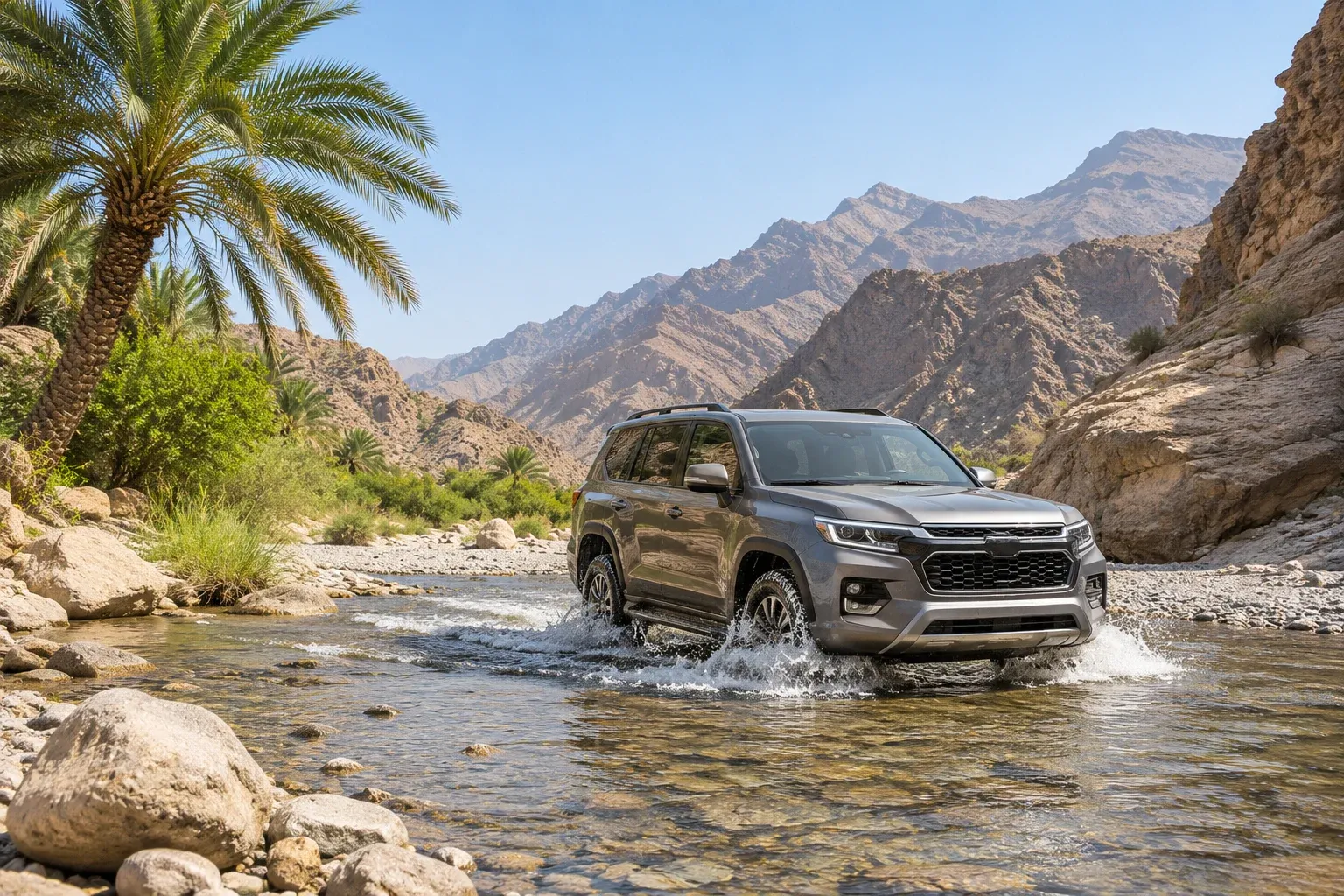
Wadis can carry water after rain, and the UAE mountains near Hatta, Fujairah and Ras Al Khaimah are examples where tracks can flood. I will keep this general, since I cannot judge a particular crossing for you.
- Do not cross if you cannot see the bottom or judge the depth.
- Moving water can push a vehicle sideways, so even shallow flow is a risk.
- Hidden rocks and holes damage tyres and rims.
- Check weather and avoid wadis when rain is forecast upstream.
- Walk a crossing first if it is safe to do so.
After a crossing, drive gently for a short distance and test the brakes, since water can reduce braking for a moment.
What damages tyres in a wadi
Sidewall cuts
Sharp rock slices the rubber. A small cut can grow, and a deep one means replacement. A sidewall puncture can never be repaired, so a cut that reaches the cords ends the tyre’s life.
Impact bruises and bulges
A hard hit can crack the internal cords without a visible cut. Weeks later a bulge appears. If you hit something heavily, have the tyre inspected. Our post on why tyres burst in UAE summer shows how hidden damage turns into failure.
Bent rims
Rock hits can bend the rim and leak air at the bead. A small bend may be repairable, while a cracked rim is not. See when a rim can be repaired.
Stones in the tread
Small stones lodge between blocks and can drill into the tyre as it flexes. Pick them out before driving on the road.
Before the trip
- Check every tyre for cuts, cracks and date code.
- Set pressure cold, including the spare.
- Confirm the spare is full-size and in good shape.
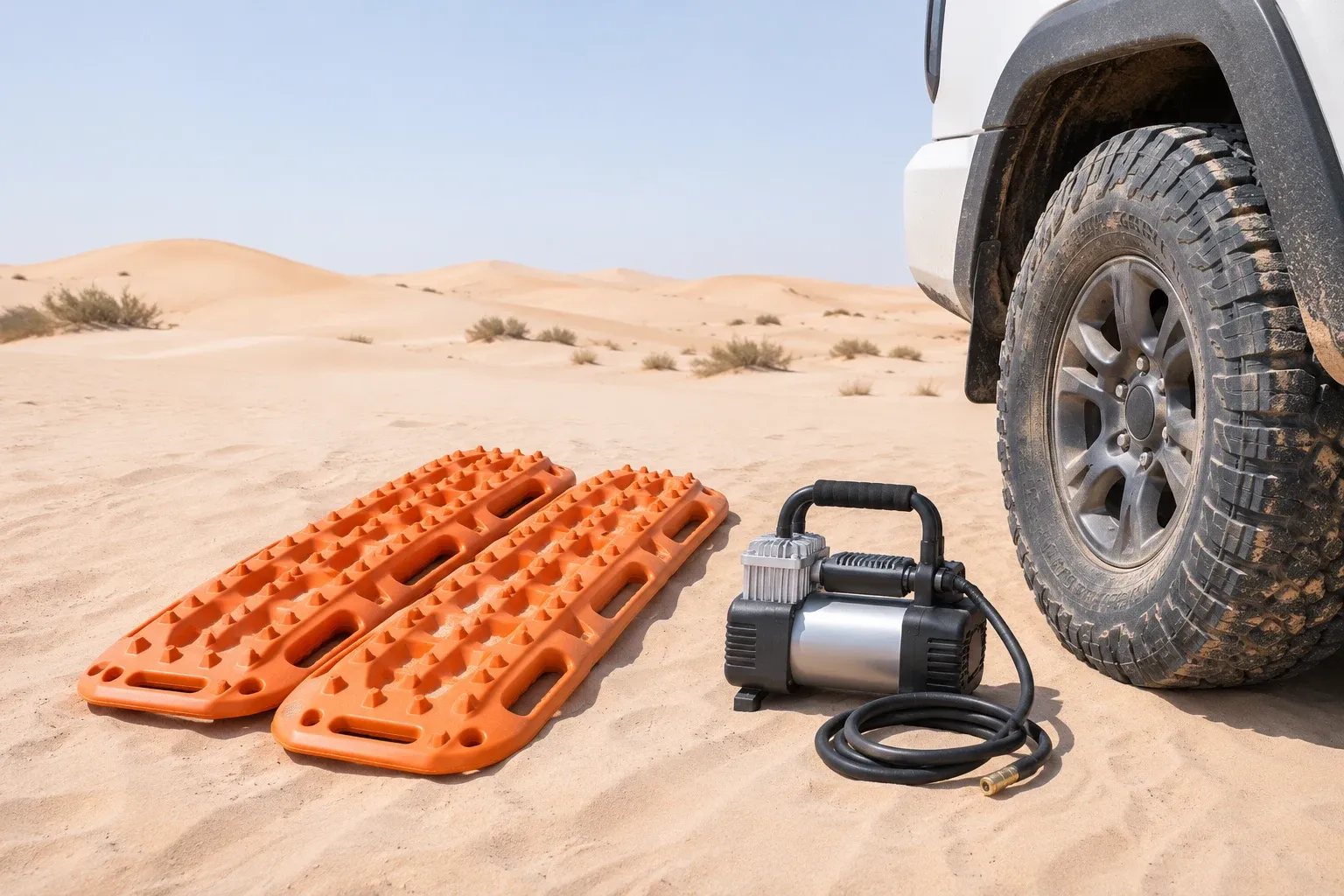
- Carry a jack, base plate, wheel brace and compressor.
- Check wheel nuts.
- Tell someone your route and expected return.
Our Desert Tyre Prep from AED 150 per vehicle includes most of this check, and works well before a mountain trip.
After the trip
- Reinflate to road pressure.
- Clear stones from the tread and rim.
- Look closely at the sidewalls in good light.
- Check for vibration and pull when you drive home.
- If the vehicle pulls, book an alignment, which starts from AED 180 per vehicle.
If you notice a slow leak the next day, a stone may have punctured the tread. Tread punctures can often be repaired, from AED 70 per tyre, but sidewall or shoulder punctures cannot.
When to stay home
Do not push on with damaged tyres, a poor spare or low fuel. Do not drive a wadi alone if you have never done it. Heat and remoteness turn small problems into big ones. Go with another vehicle, tell someone your plans, and turn back when something feels wrong.
Choosing your line and your speed
The best protection for a tyre in a wadi is driver judgement. Look ahead and pick a path that avoids the sharpest rocks. Let the tyre roll over a rock slowly rather than hitting it at speed, since the impact force climbs quickly with speed. A slow crawl over rough ground is easier on tyres, rims and suspension.
Avoid turning the wheel while the tyre sits on an edge of rock. The sidewall can catch and tear. If you need to turn, move the vehicle a little first, then steer. Keep one wheel from dropping hard into a hole by steering around it where you can.
A spotter outside the vehicle helps a lot on difficult sections. They can see the tyre, and you cannot. Use clear hand signals and agree them before you start.
Take your time and accept that the trip will be slower than you planned. Most wadi tyre damage I see comes from rushing, from a driver who treated a rock track like a dune. A calm, slow approach protects the tyres, and it gets you home with the same set you left with.
Fuel, water and a plan
A wadi trip is often far from a workshop, and mobile coverage can drop in the valleys. Carry more water than you think you need, since a tyre change in summer heat is hard work. Keep the fuel tank well topped up, because slow rock driving uses more than a road drive of the same distance. Agree a turn-back time with your group, and stick to it even if the track looks tempting. A tyre problem near sunset is far harder to solve than one at midday.
Summary
Wadi driving asks for tough tyres, sensible pressure, slow speed and a careful check afterwards. If you also drive dunes, treat the two as different jobs and set pressure accordingly. A quick visit before the trip costs far less than a recovery from a mountain track.