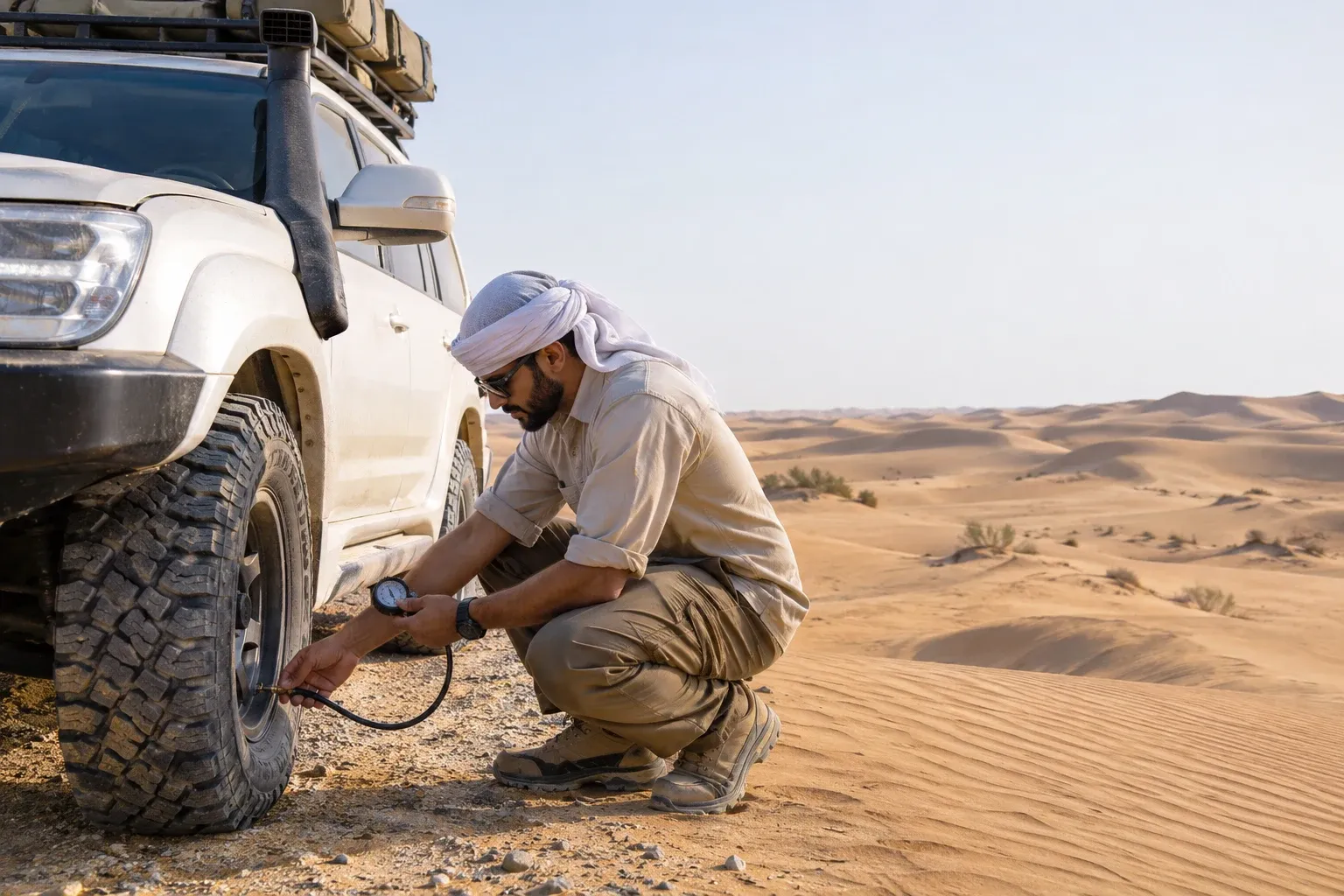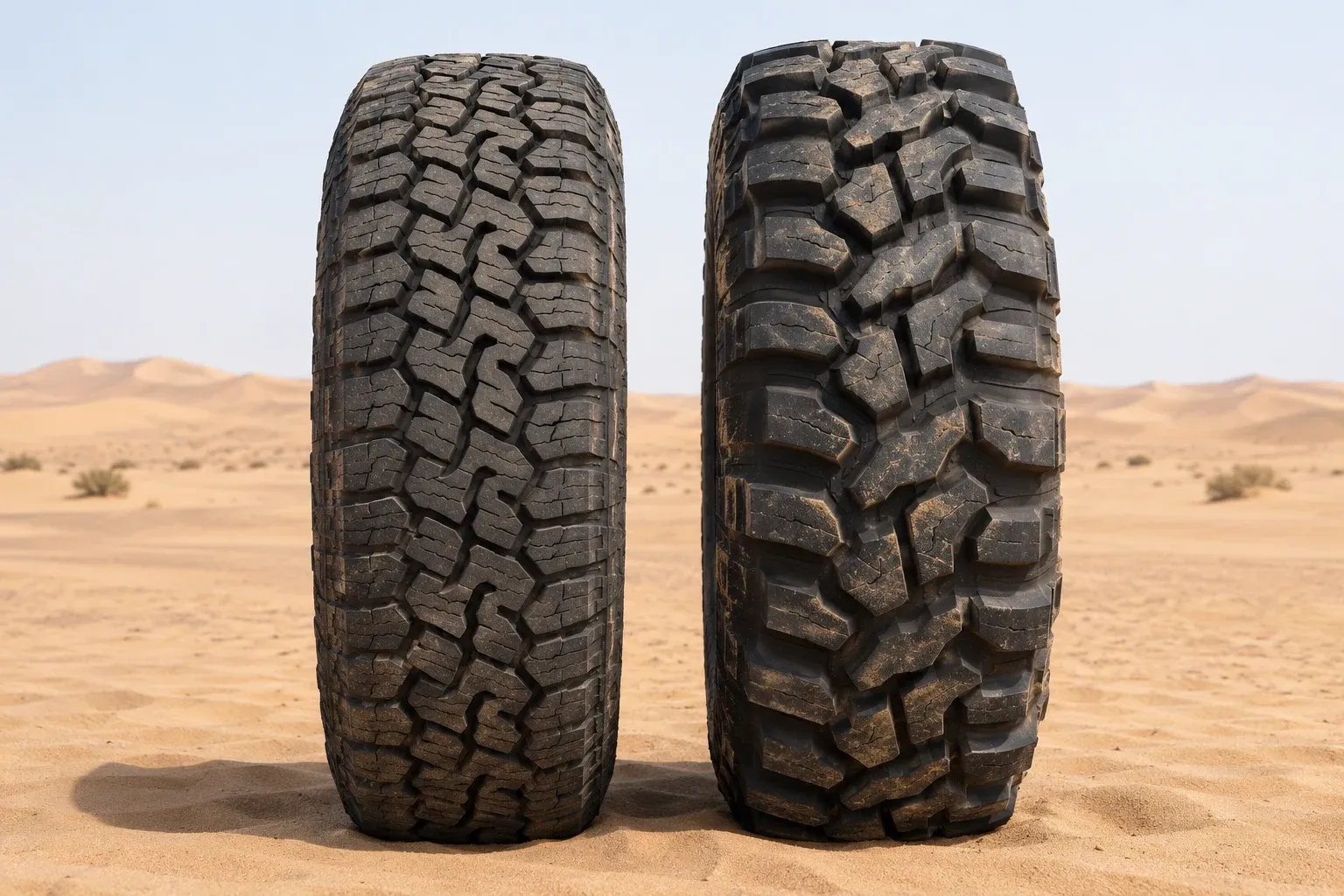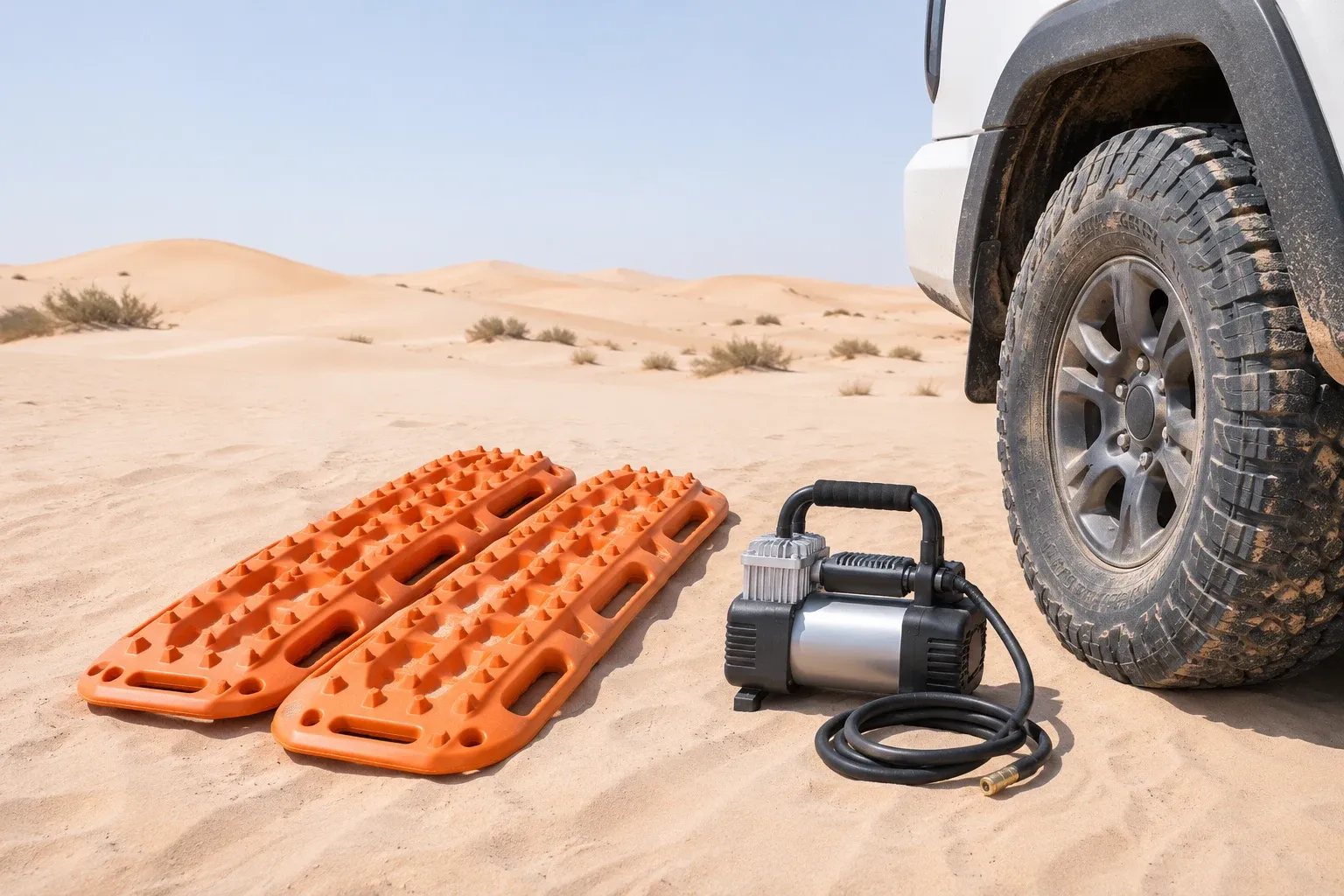
For tyres, a desert recovery kit needs a compressor, an accurate gauge, a deflator, a full-size spare at the right pressure, a plug kit, a jack with a base plate and a basic set of tools. Add recovery boards and a shovel. Check each item before the trip, not on the dune.
I get called to desert-edge car parks more often than I would like, and the pattern is the same. The driver had a good vehicle and a good tyre, but one piece of kit was missing or did not work. Here is the checklist I would use.
The core tyre items
Compressor
This is number one. A 12-volt portable compressor lets you reinflate after the dunes and fix a slow leak. Look for one that runs on the cigarette socket or battery clamps and has a decent flow rate, because a weak unit can take a long time to fill a 33-inch tyre. Test it at home. A compressor that overheats at the car park is no use.
Pressure gauge
Do not rely on the gauge built into a cheap compressor. Carry a separate, accurate gauge and compare. Low pressure on sand makes small errors matter, since the difference between 14 and 18 psi is noticeable. Read our guide on tyre pressure for dune bashing for starting points.
Deflator
A deflator lets you drop each tyre to the same pressure quickly and evenly. It saves time and avoids the guesswork of releasing air by hand. Some stop at a set pressure, which is handy but still needs checking.
Full-size spare
A matching spare keeps your tyres even and keeps you moving. A small space-saver or an old tyre of a different size is a compromise on four-wheel drive. Check three things before you leave: pressure, condition and date code. Our guide to reading the tyre date code takes a minute.
Repair items
| Item | What it does | Limit |
|---|---|---|
| Plug kit | Seals a small tread puncture | Temporary, tread only |
| Valve core tool | Removes and replaces valve cores | Needs spare cores |
| Spare valve cores | Replaces a leaking core | Cheap and light |
| Tyre sealant | Slows a leak from a small hole | Can complicate later repair |
| Bead breaker or tyre levers | Lets you break a bead | Hard work, needs practice |
Plug kits
A plug kit can get you off the sand. It does not replace a proper repair. Once home, a technician should inspect the tyre inside and out. I never repair a sidewall or shoulder puncture, and I will not repair a tyre that was run flat for any distance without opening it for an internal inspection. A plug that has been in a tyre for weeks can hide damage. Our puncture repair starts from AED 70 per tyre.
Valve cores
A valve core is tiny, and a loose or damaged one causes a slow leak that can ruin a trip. A spare core and the tool cost almost nothing and weigh nothing.
Sealant
Tyre sealant can help in an emergency, but it coats the inside of the tyre and makes later repair messier. If you use it, tell the technician. It does not fix a damaged sidewall.
Lifting and changing a wheel on sand
Changing a wheel on soft sand is where trips go wrong. The jack sinks, the vehicle shifts, and it becomes a safety issue. You need:
- Jack base plate. A solid board or plate to spread the load.
- Wheel brace that fits. Check it fits your wheel nuts, since some aftermarket nuts need a different socket.
- Torque wrench or at least a long breaker bar. Wheel nuts need to be tight.
- Wheel chocks. Stop the vehicle moving.
- Gloves and a torch. Obvious, but forgotten.
Practise once on your driveway. A first attempt in the dark at Al Badayer is a poor time to learn that the brace does not fit.
Recovery gear that affects tyres
Recovery boards
Boards under the tyre give grip and flotation. They are far better than flogging the throttle, which spins the tyre, builds heat and burns the tread. Place them straight in front of the driven wheels.
Shovel
Dig out the sand ahead and behind the wheels before you try to move. It saves effort and the tyre.
Recovery points and straps
Know where your vehicle’s recovery points are. Do not attach a strap to a tow ball or an axle component not designed for it. This is about safety for people nearby as much as the vehicle.
Before each trip
A short routine helps more than gadgets.
- Set all tyres to road pressure cold, including the spare.
- Look over each sidewall for cuts, bulges or embedded stones.
- Check wheel nut tightness.
- Test the compressor and gauge.
- Confirm the jack, brace and plate are in the vehicle.
- Fill the fuel tank, since idling and stuck driving burn more.
Our Desert Tyre Prep service starts from AED 150 per vehicle, and it covers most of this. A spare tyre service visit starts from AED 90.
After the trip
Reinflate before the tarmac, as sand pressure is not safe at speed. Then wash grit out of the beads and valves, and check for sand trapped between the tyre and rim. If you suspect trapped sand, read our post on sand in the tyre bead. Look at the sidewalls again in good light at home.
What I leave out
I do not carry a full tyre-fitting kit on every trip. Breaking a bead in the field is tough work, and a mistake can damage the rim or tyre. A better plan is to carry a good spare, stay with another vehicle, and call for help if the problem is beyond a plug. Our mobile tyre fitting vans cover Dubai, Abu Dhabi and Sharjah 24/7, with call-outs starting from AED 150, though remote desert sites are harder to reach.
Packing and checking the kit
A kit is only useful if you can reach it. I have seen drivers with every item under a pile of camping gear, unable to get at the compressor when they needed it. Pack recovery gear last so it comes out first, and keep the jack, brace and base plate together in one bag.
Test each item at home. Run the compressor and watch the gauge. Fit the wheel brace to your nuts. Check that the jack extends fully with your vehicle’s weight, and that the locking wheel nut key, if you have one, is in the vehicle. A missing key turns a simple wheel change into a recovery call.
Check consumables twice a year. Plug kits dry out, sealant expires and batteries on gauges run flat. A small tub with spare valve cores, a core tool, valve caps and a few plugs costs little and weighs almost nothing.
Finally, keep a short written checklist in the glovebox, and tick items off each trip. It sounds basic, but a list catches the one thing you would otherwise forget. Experienced drivers use them as much as beginners.
Know when to stop
If a tyre has a large cut, a bulge or a sidewall puncture, it cannot be repaired. Fit the spare and drive home gently. Do not try to patch your way out. A recovery kit makes the problem manageable, but good judgement still has to decide.